The culprit might be smaller than a matchbox: a hidden valve on your radiator that makes your boiler work harder and longer than it should.
I noticed it on a cold weeknight in January in a Milan walk-up, where the hallway felt like a sauna and the back bedroom kept shivering. The boiler chugged on, the flame icon glowing like a tiny campfire that never, ever rested. In the kitchen, a radiator hissed with the confidence of a kettle, while the one by the bed barely whispered. The thermostat said 20°C. The bill said: not enough. Then an old technician pointed at a discreet cap on the side of a radiator and smiled the way people smile when a puzzle clicks. It looked like nothing. It was everything.
The hidden valve that quietly burns your money
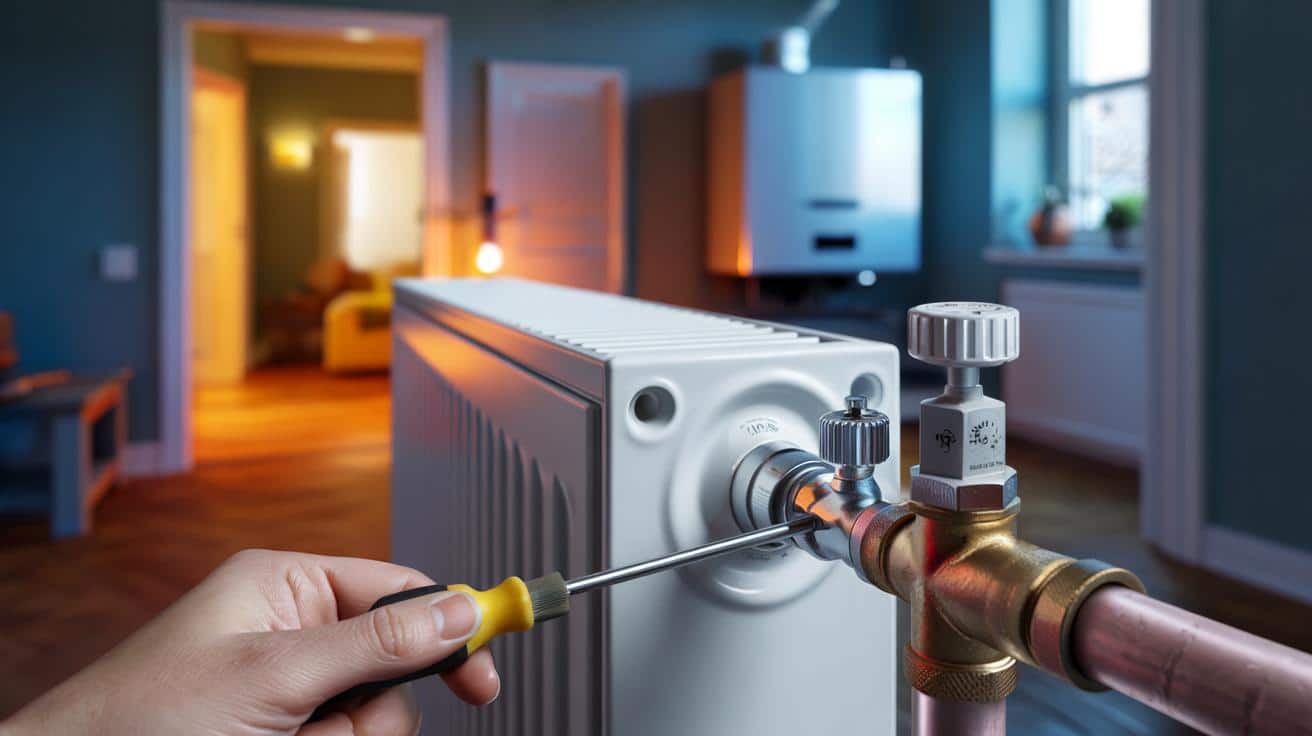
Most homes with radiators have two knobs per radiator. One you touch every day. The other you don’t. That quiet one is the **lockshield valve**. It controls how much hot water flows through a radiator and how fast it returns to the boiler. When it’s fully open everywhere, the closest radiators steal most of the heat, the far rooms starve, and the boiler runs longer to compensate.
We’ve all had that moment when one room is tropical and the next room begs for a sweater. That imbalance is not “old building charm”; it’s a flow problem. In an unbalanced system, heat rushes back to the boiler too quickly from the first radiators in the loop, which stops the boiler condensing properly. Less condensing means worse efficiency and extra gas burned. A small twist on that hidden valve can change the tempo of your whole system.
Here’s the logic. Radiators are happiest when hot water enters, gives up energy, and returns cooler. The boiler is happiest when the return water is cool enough for condensation inside the heat exchanger. That’s where it gets the “bonus” efficiency. If the lockshield is wide open, water barely lingers and returns too warm. By partially closing that valve on faster radiators, you slow the flow just enough to even out temperatures and improve boiler efficiency. This is called balancing, and it can trim consumption noticeably in real homes.
How to set it, step by step
Find the lockshield. It’s the valve on the opposite end of your radiator from the everyday control. Often there’s a simple cap. Beneath it is a small square or slotted stem. Turn off heating for 20 minutes. Then turn it back on and set your usual room target. Start with the radiator closest to the boiler. Open its lockshield about a quarter turn. Next radiator: a bit more. Furthest radiator: a little more again. You’re shaping flow like a river delta, not opening floodgates.
If you have clip-on thermometers, aim for a **ΔT of 10–20°C** between the flow in and the return out on each radiator. No gadgets? Use touch carefully: the top should be hot, the bottom warm, not stone cold. Give each tweak time. Wait 10–15 minutes to see the effect before touching anything else. *Patience here is the cheapest energy you’ll ever “buy”.* And don’t open your boiler’s casing. That’s a professional’s territory.
Common mistakes? Opening every lockshield fully “to be safe.” That’s like flooring the gas on all taps in your home and hoping it evens out. Another pitfall is setting the **thermostatic radiator valve (TRV)** to max and then fighting the heat by opening windows. Set TRVs where you want comfort, and let the lockshield do the quiet balancing behind the scenes.
“I’ve seen bills drop 10% in a weekend, just from balancing,” says Luca, a heating tech in Turin. “It’s not magic. It’s hydraulics.”
- Do not adjust the boiler’s internal gas valve or open sealed panels.
- Give the system time after each adjustment.
- Prioritize rooms you actually live in; corridors can run cooler.
- If in doubt, note your starting positions so you can roll back.
Why this one change pays you back
When radiators share fairly, the thermostat gets satisfied sooner. The boiler cycles less. Return temperatures drop into the sweet spot where a modern condensing boiler harvests extra heat from the exhaust. That’s quiet, invisible efficiency. You won’t hear a sound, but your meter will spin slower. In small apartments, balancing can be done in an hour. In bigger homes, make tea, put on a podcast, and work room by room.
There’s a mindset shift here. People chase complex upgrades and forget the basics. A balanced system helps before you even think about smart thermostats or fancy zones. Combine it with a sensible boiler flow temperature—often 55–60°C on mild days—and you’ll encourage long, steady burns instead of short, wasteful bursts. Let’s be honest: nobody really does that every day. But doing it once in autumn can change your whole winter.
Some ask if the gas regulator at the meter is to blame. That’s a different valve, handled by professionals. Your unlock is inside the home’s water loop, not the gas line. This is where DIY lives safely. If a radiator stays cold even after balancing, bleed it to remove trapped air. If one room still lags, nudge its lockshield a touch more open and soften the ones in overheated rooms. Think small moves. Big twists make big headaches.
There’s a story I keep hearing. A family in Bologna closed heavy curtains over a radiator with a TRV. The sensor sat behind fabric, thought the room was freezing, and called for endless heat. Curtains off, balance reset, and the boiler finally relaxed. These “aha” fixes sit in plain sight. They’re boring. They’re gold.
What about old cast-iron radiators? They love gentle, balanced flow. What about underfloor heating? It has its own manifolds and lockshields, same principle, different hardware. In both cases, avoid fighting the system with windows wide open. Use doors to zone. Lower setpoints in unused rooms. Balance once, then live your life. The boiler should be a background character.
One more human detail: start with comfort. If your living room feels right, you’ll accept a bedroom that’s a degree cooler and a hallway that simply guides you through. Homes are not laboratories. Warmth is a feeling as much as a number.
Your gas bill isn’t a riddle with a thousand variables. It’s a handful of habits and one humble valve that tells hot water how to behave. The day you tame that flow, the rest of the puzzle becomes easier. Neighbors will swear it’s the tariff. You’ll know it’s the balance.
A final nudge. If you’re changing radiators, ask for preset lockshields or have them set by a pro. If you’ve renovated, rebalance once the dust settles. If nothing else, walk to the hottest room and give that lockshield a polite, small turn toward closed. It’s not a punishment. It’s choreography.
This isn’t a heroic mission with spreadsheets and thermal cameras. It’s a calm Saturday task that returns money every month you heat. And on the first cold night after you balance, when every room finally feels like the same house, you’ll hear it. Not the hiss of wasted heat. The quiet of a boiler that can rest.
Think of balancing as gifting time back to your boiler. Less strain. Fewer on-off jolts. A longer life. If you’re renting, it’s still fair game—nothing invasive, just gentle adjustments. If you’re worried, take photos of your starting positions. You’re not breaking a rule. You’re teaching your system rhythm.
And yes, there will be that moment when you forget which valve you turned. Smile. Then turn a quarter back and wait. Heating is slow language. It speaks in minutes, not seconds.
Early winter or late, apartments or townhouses, this little tweak works in more places than it fails. There are no medals for perfect ΔT on every radiator. There is the relief of a bill that finally looks like it belongs to your home, not to a sauna. It starts with the small cap you’ve never noticed before.
If any of this feels daunting, call a certified technician and simply say the word “balance.” They’ll know. You can watch, ask questions, and keep that knowledge for next time. The quiet confidence of a stable system is contagious.
And on that first steady evening, with heat that doesn’t lurch and rooms that agree with each other, you might catch yourself wondering how long that tiny valve had been quietly spending your money. The answer won’t change the past. It will change your next bill.
Share the warmth, not the waste
When people hear “gas bill,” they think geopolitics or bad luck. Then they meet the lockshield and realize the system was simply shouting. Tighten the loud radiators, let the quiet ones speak. A small act, done once, that ripples through comfort, cost, and even the mood of your evenings. That’s a lot for half an hour with a screwdriver.
| Point clé | Détail | Intérêt pour le lecteur |
|---|---|---|
| Identify the lockshield | Opposite end from the everyday control, under a cap | Finds the real lever for comfort and savings |
| Balance by distance | Closer radiators: more closed; farther ones: more open | Stops hot spots and helps the boiler condense |
| Aim for even cooling | Top hot, bottom warm; or a 10–20°C drop | Cuts run time without sacrificing comfort |
FAQ :
- Which valve are we talking about exactly?The lockshield valve on each radiator—the one you rarely touch, often hidden by a small cap.
- Is it safe to adjust this myself?Yes, you’re only throttling water flow in radiators. Do not open the boiler casing or touch any gas valves.
- How long will balancing take?In a flat, about an hour. In a house, a relaxed afternoon with pauses to let temperatures settle.
- What if my radiators have no TRVs?Balancing still works. Use the lockshields to even the heat, and set your room thermostat as usual.
- Can this really lower my bill?Many households see noticeable savings and steadier comfort. The boiler runs less and at better efficiency.