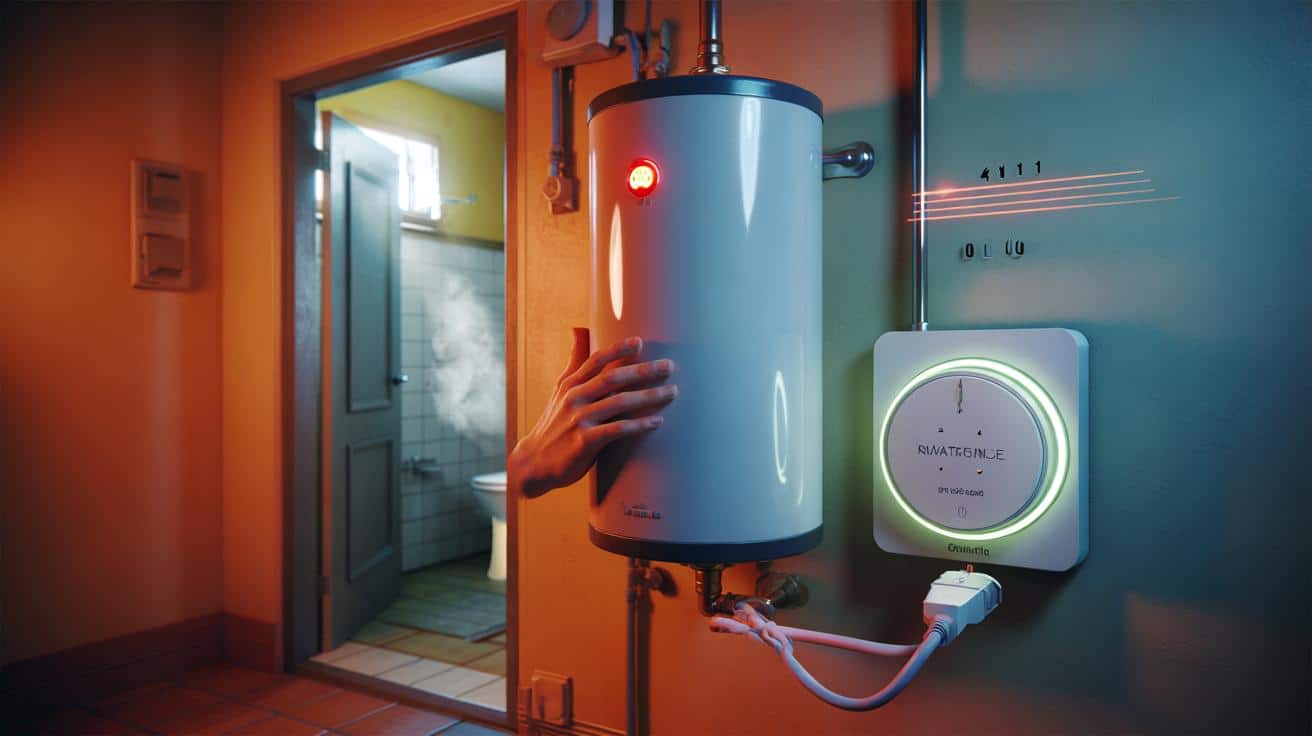
You stare at the little red light on the scaldabagno elettrico and wonder: should it stay on all day, or is the timer your best ally against rising bills? The fear of running out of hot water pulls one way, the energy app screaming at you pulls the other. Between comfort and consumption, where does the truth sit?
In the hallway, a white cylinder hums quietly behind a closet door, as if keeping a secret. The power meter blinks faster when someone opens the shower. You can almost hear the budget tightening with the steam.
We’ve all had that moment when the last person in the house yells, “There’s no hot water left!” and everyone else decides the culprit is the timer. Yet late at night, the same household leaves the heater glowing for hours with nobody in the bathroom. The scaldabagno isn’t just a device. It’s a rhythm, a habit, a quiet drain or a clever reserve. There’s a twist most people miss.
Always on or timed: where the energy really goes
Open the lid of the debate and you find something simple: heat wants to escape. A storage water heater keeps a 50–80–120 liter tank hot, losing a bit of energy through the insulation every hour. The thermostat clicks on to top up that loss, like a fridge in reverse.
An older 80 L unit can waste around 1.5–2.0 kWh per day just to stay hot. A newer, well-insulated 120 L model might lose 0.8–1.2 kWh. At €0.25–€0.35 per kWh, that’s €7–€21 a month in standby alone. Picture a small apartment in Bari: two showers at night, one quick dishwash rinse at noon. They kept the heater on 24/7 for years. The bill spiked every winter, and they blamed the cold. The truth was humming in that cupboard.
Heat loss scales with temperature. The hotter the water versus room air, the faster the leak. Larger tanks have more surface area, so more trickle. Whether you heat continuously or in short bursts, the energy to raise cold water to your setpoint is the same. The battleground is what you spend in between uses keeping that reservoir hot. That’s where a timer can cut fat without touching comfort.
When a timer wins (and when it backfires)
Set the timer to preheat only when it matters. For most homes: an evening block about 60–90 minutes before showers, and a short morning block for handwashing or a quick rinse. Keep the setpoint at 50–55°C for daily use, then run a weekly “sanitizing” cycle at 60–65°C for an hour. A cheap smart plug with scheduling does the job if the boiler lacks a built-in timer.
The mistake is going too strict. If someone showers at odd hours, your “perfect” schedule turns into a cold surprise. Oversized tanks make it worse, as they leak more heat while waiting. Let’s be honest: nobody really does that every day. Start generous, then trim. If you see no comfort loss after a week, cut 15 minutes. If complaints begin, add 15 back. You’ll land on a sweet spot you don’t have to babysit.
Think of heat like a budget you refill just in time. Comfort doesn’t come from a 24/7 blaze; it comes from a well-timed warm-up. A timer shines when your routine is predictable, your tank is well-insulated, and your electricity is cheaper at night.
“The cheapest kilowatt-hour is the one you never had to buy,” an energy auditor told me, pointing at a dusty cylinder fitted with a five-euro timer. “Don’t boil water nobody will use.”
- Preset to try: 18:30–20:00 and 06:30–07:00 on weekdays.
- Vacuum guests? Add a temporary midday 30-minute boost.
- Night tariff? Shift the big block after 22:00 if comfort allows.
- Weekly hygiene: one high-temp hour at 60–65°C.
- Feel the tank jacket: warm to the touch means poor insulation.
What actually saves, by the numbers
Imagine a 100 L heater at 55°C in a 20°C utility room. Daily standby: ~1.2 kWh. Keep it on all week and you’ll burn about 8.4 kWh just babysitting temperature. Use a timer and cut “hot-idle” hours by half, and that standby slice can fall near 4–5 kWh. The shower energy doesn’t change. The leak in between does. That’s the quiet saving: trimming the hours your tank sits hot and unused.
There’s also the comfort calculus. If your household packs all showers into 90 minutes, a single preheat block is perfect. If people trickle in all day, a timer will chase chaos. In that case, drop the setpoint a notch and add an insulation jacket, then let it run. You still lower losses without anyone fighting the schedule. And if your utility offers off-peak pricing, reheating mostly at night can shave another 10–30 percent off that chunk of the bill.
Physics won’t be bullied. A kilowatt-hour into the tank is a kilowatt-hour of heat, minus leaks. Bigger ΔT means faster leaks. Smaller tanks reheat faster but run out sooner. A timer solves a behavioral pattern; it doesn’t rewrite the laws of thermodynamics. If your life is a routine, the timer is a superpower; if it isn’t, tune temperature and insulation first.
The calm in the middle: costs, comfort, and peace of mind
There’s no single switch that fits every kitchen and bathroom. Some homes hum along with a twice-a-day boost and never think about it again. Others live by impulse, and a strict timer feels like a diet in December. Both can win.
Let the numbers help, not rule you. Track one week always-on, one week timed. Compare kWh and comfort notes. Keep what works. If your bill is the main stress, hunt the cheap wins: insulation jacket, lower daily setpoint, night tariff, right-sized tank. If comfort is the crown, widen the schedule and let the heater coast.
What people really want is not “always on” or “timer” stamped on a label. They want a hot shower when they need it and a bill that doesn’t bite. That’s the balance waiting behind that little red light, the one you can tune without turning your home into a lab. The rest is just noise.
| Point clé | Détail | Intérêt pour le lecteur |
|---|---|---|
| Standby losses drive hidden cost | 1.0–2.0 kWh/day depending on tank and insulation | See where money leaks when no one uses hot water |
| Timer works with routines | Preheat 60–90 min before use, weekly high-temp hour | Cut waste without cold showers |
| Alternate levers exist | Lower setpoint, add insulation, shift to off-peak | Save even if a timer doesn’t fit your lifestyle |
FAQ :
- Is it cheaper to keep the electric water heater on or use a timer?Using a timer is cheaper when your hot water use is clustered. You cut standby hours while keeping the same shower energy. If your usage is random all day, a modest setpoint and good insulation may beat strict scheduling.
- What temperature should I set?Daily comfort often sits at 50–55°C with a mixing valve. Run a weekly hour at 60–65°C to manage hygiene risks like Legionella. If anyone is immunocompromised, favor the higher range and consult local guidance.
- How long should the heater run before a shower?Most 80–120 L tanks need 45–90 minutes from lukewarm to setpoint. Start with 90 minutes, then trim in 15-minute steps until comfort just holds. Household size, tank power, and inlet water temperature all matter.
- Do off-peak tariffs really help?Yes. Shifting reheating to night rates can shave 10–30% from the water-heating line, especially in regions with strong price gaps. Pair a night boost with a short pre-evening top-up if you need it.
- Any quick fixes if I’m not ready for a timer?Add an insulation jacket if the tank feels warm to the touch. Drop the setpoint by 2–3°C. Bleed dripping hot taps. And space showers by 10–15 minutes to let the tank recover. These small moves stack up fast.