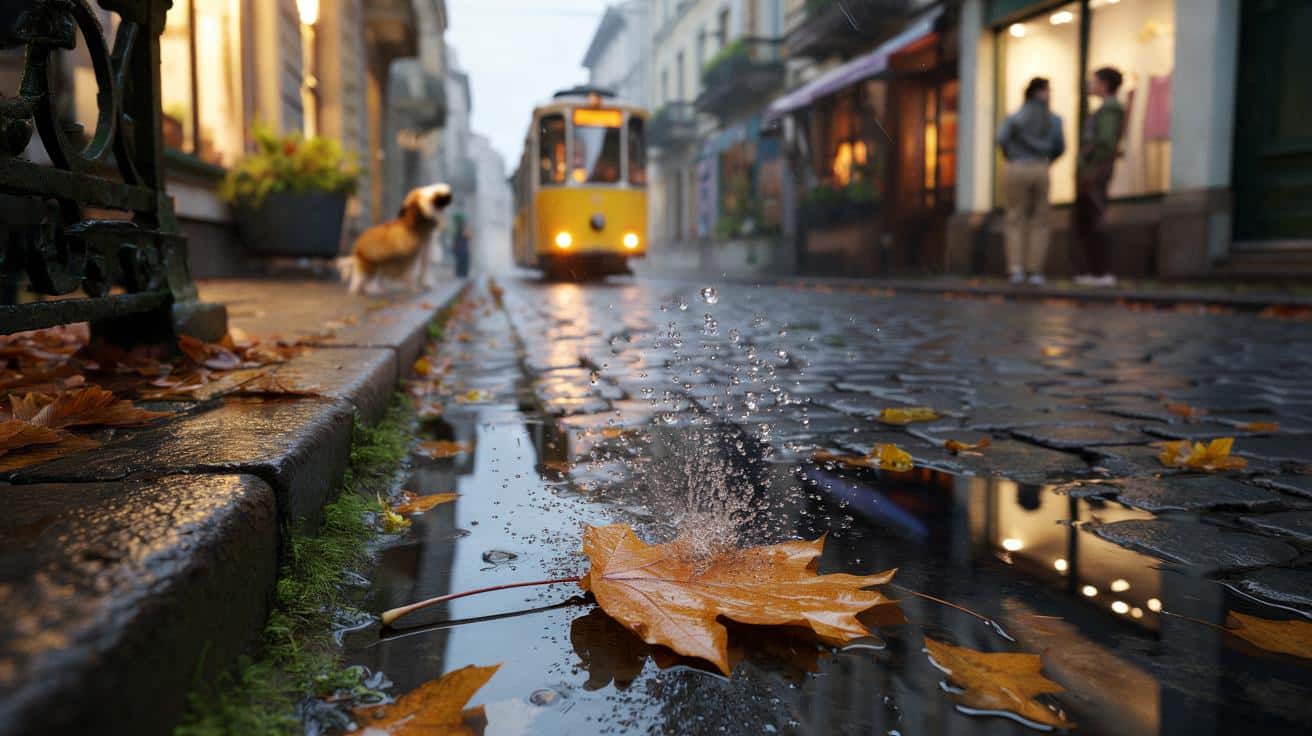
The scent that rises when rain meets a waiting city. It makes rooms feel softer, streets look cinematic, and our pulse slow for a beat we didn’t know we were missing.
The first drops arrived on a Sunday, when the afternoon was half-done and the kettle hadn’t yet boiled. A pre-storm hush floated over the block, the sky bruised and swollen, the kind that makes dogs tilt their heads. Someone pulled laundry in from a balcony. A tram sighed. Then the air shifted. It was earthy but clean, like wet stone near a river, like the first page of a book printed years ago. I stood by the window and breathed deeper than usual. My shoulders lowered without asking. I thought about childhood, wet shoes, the way a jacket smells when you come back in. Something inside clicked into place. And then the rain hit the dust.
The chemistry hiding in that first breath
Autumn rain smells different because the world is primed for it. Long dry stretches let microscopic compounds build in the soil and on sidewalks. When the first droplets land, they fizz those scents into the air, a tiny storm of aroma. Scientists even gave the phenomenon a name in the 1960s: petrichor, a blend of plant oils and minerals released by rain. It’s the kind of word that already feels damp. And it fits like a key.
Here’s a vivid picture: a raindrop hits a dusty leaf. A bubble forms, then bursts, launching invisible aerosols upward like a soft spray. Inside that mist ride molecules with familiar roles. Geosmin, produced by soil bacteria, brings the earthy, beet-like note our noses catch at parts per trillion. Ozone from charged air adds a sharp, metallic top. Plant oils stored through summer lend a gentle green. Together they perform a chord you don’t hear so much as remember.
Our brains file smells next to memory and emotion, not logic. The olfactory bulb is wired straight into the limbic system, which is why a wet pavement can unlock a schoolyard, a kitchen, a person you once hugged in a doorway while it rained. That fast route makes the scent feel immediate and oddly personal. **It isn’t just chemistry in the air; it’s biography on the breeze.** The season cranks up the effect, too. Cooler air holds scents differently, and fallen leaves ferment a little blanket of sweetness under the geosmin’s bass line.
How to catch it, keep it, and share it
Start with timing. The first minutes of a shower after a dry spell are the richest, so open a window where the rain hits stone, soil, or old brick. Step into a porch or under a tree. Breathe through your nose in slow, soft sips—two counts in, four counts out—so the aroma sits with you rather than rushes past. If you can, stand near a garden bed or a planter. The closer the drop meets the dust, the fuller the song.
Skip the heavy candle until later. Let the rain do the composing first. Strong fragrances can bulldoze the subtle notes you came for. Keep a dry cotton scarf nearby and let it pick up a trace by the doorway. That way the scent stays with you when you head out again. Let’s be honest: nobody really does that every day. But on crisp weekends, it’s a small ritual that can change the hue of an hour.
Each place has its own petrichor accent. City afterglows lean mineral; parks turn mossy; seaside towns get a marine edge the moment the pavement darkens.
“Smell is a time machine that fits in your pocket,” a perfumer once told me on a rainy curb, watching steam rise from a hot street.
Try building a tiny “rain palette” to notice what you love most:
- Stone: sniff near steps, old walls, or fountains after the first drops.
- Soil: lean over planters or a patch of grass as bubbles burst.
- Leaves: brush a wet leaf, then smell your fingers for the green note.
- Wood: fence posts and benches add a warm, damp timber scent.
- Metal: railings carry the ozone tang that sharpens the mix.
Why it lifts the mood, even on grey days
Some of the feel-good comes from contrast. Autumn nudges us inward—earlier twilights, thicker sweaters—so when rain wakes the air, our senses get a little jolt. That novelty lights up attention and calms the restlessness that hums under a busy day. There’s a simple physical factor too: cooler, moist air can be easier on the breath, and the act of smelling slows us for a moment. *Pausing is a kind of medicine we forget to take.*
There’s talk about negative ions around waterfalls and after storms. The research is mixed, and the magic is often overstated. Still, the experience is real. You stand in a doorway, inhale, and your shoulders drop. Fragrance brands try to bottle the effect, but the truest version is free and unrepeatable. **That fleeting quality is part of why it feels precious, like catching a song played once.** We’ve all had that moment when the world felt newly washed and somehow more forgiving.
Memory does the rest. Autumn is a season full of milestones—new school years, new jobs, new routines—so the smell of rain becomes a bookmark. Each time it returns, your mind flips to a page you didn’t even know you saved. The sensory shorthand takes you there faster than thought. If you share it with someone—standing under the same awning, laughing at the same runaway umbrella—it turns into a small, shared anchor. **That’s how a weather event becomes a thread in your story.**
Now, if you want to keep learning from your nose, play with your environment. Crack the window in the kitchen for five minutes as the first drops fall, even if the kettle is singing. Walk the long way to the store when the forecast says a light drizzle. Swap loud earbuds for a quiet minute in the entryway after you come inside. Small switches, big payoff. The goal isn’t productivity. It’s presence.
Collect moments, not products. Fancy diffusers can be great on dark nights, but you don’t need to buy a mood. Let the real outside air do the heavy lifting, and then layer softly if you want: a tea with earthy leaves, a thin wool sweater that takes on a whisper of the day. If you journal, write one sentence about what the rain smelled like. That’s enough to seed a memory. If you don’t, tell someone over dinner. Stories stick.
One last thing about the science without the lab coat. Petrichor comes from plant lipids stored in dry spells, geosmin from actinobacteria in soil, and a kiss of ozone when electrical charges break apart oxygen molecules. Your nose is freakishly good at catching geosmin at tiny levels, which is why the first seconds feel loud. If you want the richest version, aim for these cues: the first splatter after a dry run, cool air, low wind, and surfaces that have texture. There’s no quiz. Only curiosity.
Carry the scent forward
The best part of profumo di pioggia autunnale is how it keeps teaching attention. You notice the sheen on a streetlight pole, the darkening edge of a curb, the breath of a neighborhood waking up under water. You look up. Maybe you even put your phone away for a block. The scent turns the walk between things into a destination, and that might be the most generous thing weather can do.
| Point clé | Détail | Intérêt pour le lecteur |
|---|---|---|
| Petrichor 101 | Blend of plant oils, geosmin, and a touch of ozone released when rain hits dry surfaces | Understand what you’re smelling and why it feels familiar |
| First-minute magic | Richest aroma in the opening moments after a dry spell, near stone or soil | Catch the best window for a deeper, more satisfying experience |
| Rituals that stick | Open a window, wet a scarf lightly, take slow nose-first breaths | Easy ways to bring the mood-lifting scent into daily life |
FAQ :
- What exactly is petrichor?Petrichor is the term for the pleasant smell that rises when rain hits dry ground, created by plant oils and compounds like geosmin released into the air.
- Why does autumn rain smell stronger?After dry, cool stretches, more scent compounds build up on surfaces, and cooler air carries them cleanly when the first drops land.
- Is it true negative ions make me feel calmer?Evidence is mixed, but many people report a clearer, calmer feeling after storms; the pause and novelty likely play a big role.
- Can I bottle the scent at home?Not perfectly. You can get close with earthy teas, light green perfumes, or drying a damp scarf by the door, but the real thing is site-specific and fleeting.
- Does city rain smell different from country rain?Yes. Urban notes lean mineral and metallic, while parks and fields add mossy, woody, and leafy tones from soil and vegetation.