Frigorifero rotto? Before you panic, pause. The room your fridge sits in might be the hidden culprit — too hot, too cold, or simply stifling — and that changes everything.
I opened the fridge and the butter felt soft at the edges, the milk just a touch warmer than it should be, the kind of almost that makes you squint. Outside the window, heat pushed its way in like an uninvited guest, and inside, the compressor sulked in silence, a single red flag among the salad leaves and leftover pasta.
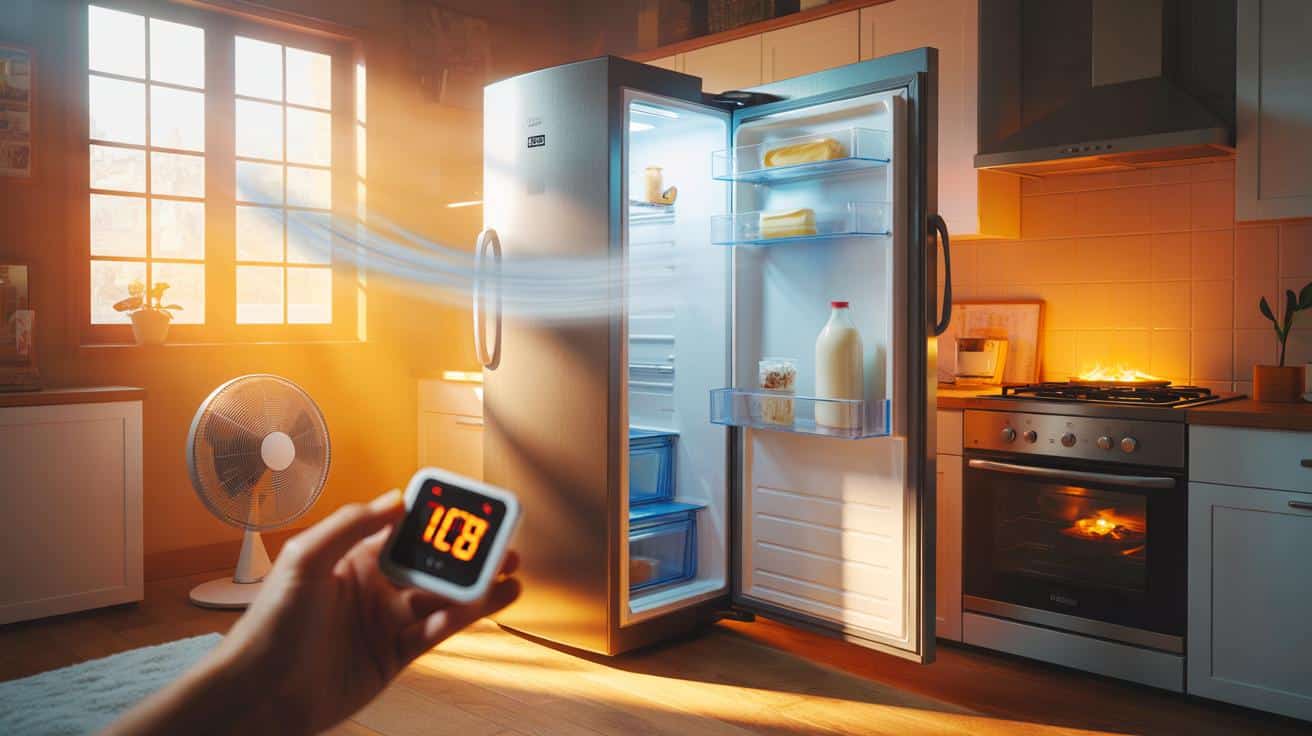
I reached for my phone to call a technician, then noticed the tiny stick-on thermometer I’d forgotten on the backsplash. Thirty-four degrees Celsius in the room, no joke. A fan clicked on across the hall, moving air that felt like a hair dryer. It wasn’t the fridge at all; it was the room.
We’ve all had that moment when the appliance we depend on suddenly feels fragile. Here’s what that moment rarely says out loud: the fridge is only as steady as the air around it. Intriguing, right?
When the room tricks your fridge
Refrigerators aren’t magic boxes; they’re heat movers, and the air they breathe matters. In a hot kitchen, the condenser at the back can’t dump heat fast enough, so the compressor runs longer, runs hotter, then slows or trips. In a chilly space, especially below about 10–12°C, many fridges lull themselves to sleep because the main thermostat thinks the cabin is already “cold,” leaving the freezer to drift upward in temperature. Room temperature can make a perfectly healthy refrigerator look broken.
Think about a tiny city apartment with the fridge crammed beside an oven, or a garage in winter that never wakes above 8°C. In the first case, the air behind the fridge sits like a sauna, raising head pressure and squeezing efficiency until food warms at the front while the back panel sweats. In the second, the freezer thaws meat even as the milk chills, a mismatch caused by a single thermostat that reads only the fridge compartment. Both owners reach for a service call. Both are shocked when the fix is to move the machine 10 cm or switch on a space heater.
The sticker on the back tells a quiet story: climate class. SN (10–32°C), N (16–32°C), ST (16–38°C), T (16–43°C). That’s the ambient range where your fridge promises to behave. Go beyond it, and physics takes over. A hotter room raises the temperature difference the system must overcome, the compressor draws more current, and protective devices can cut out; a colder room tricks the thermostat into idling while the freezer suffers. Airflow compounds it: dust on coils, tight cabinets, no gap up top. It looks like a fault. It’s workload.
Try these checks before you call the technician
Start with a cheap digital thermometer on the counter, away from direct sun or steam. If the room sits outside 16–32°C for long stretches, that’s your first clue. Pull the fridge forward and leave at least 5–10 cm behind and a clear path up top, then feel the air: warm air should vent out the back or the grille; if it’s trapped, it recirculates. Vacuum the condenser coils, wipe the front kick plate, and clean the door gaskets with warm soapy water so they close without gaps. Five minutes with a thermometer can save an expensive service call.
Look at the load inside. Crowded shelves block cold air, and covering every container with foil or bags creates a dense wall that makes circulation sluggish. Keep raw and cooked items from pressing against the rear wall, where frost builds and sensors read wrong. Make a quick power check: plug directly into the wall, no thin extension cord, and confirm the outlet isn’t tied to a flaky switch. Let’s be honest: nobody actually does that every day. Still, these tiny things pull a surprising amount of weight.
Be mindful of the room itself. Afternoon sun can pound a corner of your kitchen, and a stove used for hours can bump the local temperature far above the rest of the home. Your fridge isn’t a magic box; it’s a heat pump fighting the air around it.
“Half the ‘my fridge died’ calls are a room problem in disguise,” a veteran repair tech told me on a sweltering day. “Give the machine air and the right climate class, and it’ll outlive your lease.”
- Target ambient: 16–32°C for most models; check the climate class label.
- Clearance: 5–10 cm behind, open path above, no tight cabinets.
- Power: dedicated outlet, no skinny extensions, stable voltage.
- Load: don’t block vents; leave space around the back wall.
- Location: away from ovens, radiators, and direct sun.
What this changes for your wallet and your food
Steady room temperature nudges your fridge back into its comfort zone, which often means quieter cycles, tighter temperatures, and fewer late-night worries over chicken leftovers. Food safety rides on consistency, not heroics, and a calmer compressor usually means a longer life and a lower bill, because the unit isn’t sprinting to stand still. If you live with heat waves or in an unheated space, it may nudge you toward models with ST or T climate classes or toward small lifestyle shifts, like a shade blind for that brutal 4 p.m. sunlight. None of this is glamorous, yet it’s the kind of control that steadies a household. You notice fewer mysteries in the crisper. You waste less. You open the door and feel the same air, day after day, and you quietly keep it that way.
| Point clé | Détail | Intérêt pour le lecteur |
|---|---|---|
| Check ambient temperature | Use a counter-top thermometer; aim for 16–32°C, within your fridge’s climate class | Quickly rules out a “fake fault” and prevents wasted service calls |
| Improve airflow | Leave 5–10 cm behind; clear the top; vacuum coils and the kick plate | Boosts cooling performance and lowers energy use |
| Mind location and load | Avoid ovens and sun; don’t block vents; keep a little space around items | Keeps temperatures stable and food safer, day to day |
FAQ :
- What room temperature is too hot or too cold for a refrigerator?Most fridges are designed for 16–32°C rooms, while ST and T classes can handle up to 38–43°C. Below 10–12°C, many units short-cycle and let the freezer warm.
- Why does my freezer thaw in a cold garage, even though the fridge seems fine?On many models, a single thermostat in the fridge compartment “thinks” the cabinet is cold enough in a chilly room, so it stops calling for cooling, leaving the freezer to drift warmer.
- Can direct sunlight or an oven really mess with a fridge?Yes. Local hotspots around the condenser push head pressure up and reduce efficiency. A sunny corner or nearby range can turn a normal day into an overload.
- Should I call a technician if the compressor is silent?Check room temperature, airflow, and power first. If the unit stays warm inside after 4–6 hours in a normal room with proper clearance, it’s time to call for service.
- Is moving the fridge a few centimeters actually worth it?Often, yes. A 5–10 cm gap can improve heat rejection, reduce run time, and bring cabinet temperatures back into range without touching a single component.