You love the sparkle, your feline loves the climb. Between the two of you sits a simple, crinkly peace treaty: aluminum foil. One roll can mean the difference between a serene living room and a nightly crash of ornaments, paws, and pine needles.
The first time I saw the foil trick in action, the living room looked like a cozy magazine spread: cinnamon candle on the shelf, a plaid throw on the sofa, a spruce that smelled like a forest after rain. Then came the cat. Tail like a metronome, eyes set on the glittering low branches, he made his slow, rehearsed approach. The owner rose quietly, tore a strip of foil, and tucked it along the tree skirt, creating a gleaming little moat. The cat froze, one paw hovering, ears twitching at the crackle. Then the foil crackled.
Why cats wage war on the Christmas tree
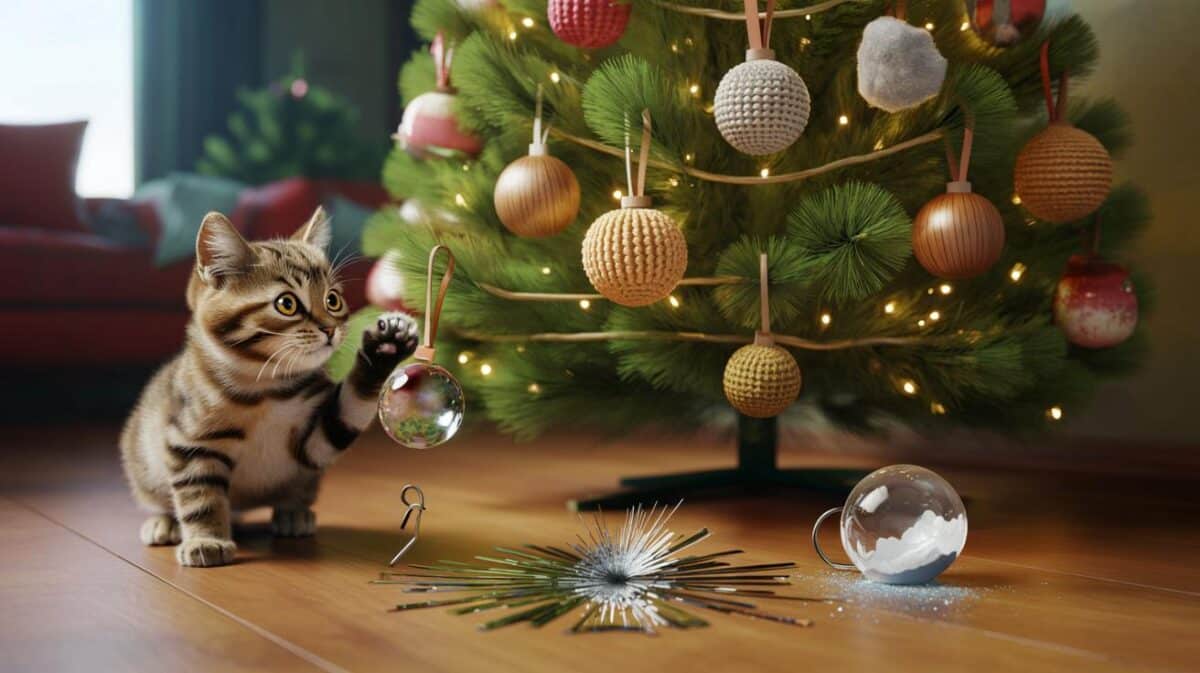
Look closely at a cat’s face near a Christmas tree and you’ll see it: curiosity buzzing under the whiskers, pupils going moon-wide, that little pre-pounce shoulder ripple. Trees are vertical territory, a ladder to power and scent and view. Dangling ornaments mimic prey, and the dense tangle of branches is a ready-made hideout. It isn’t malice. It’s instinct meeting an irresistible seasonal theme park in your living room.
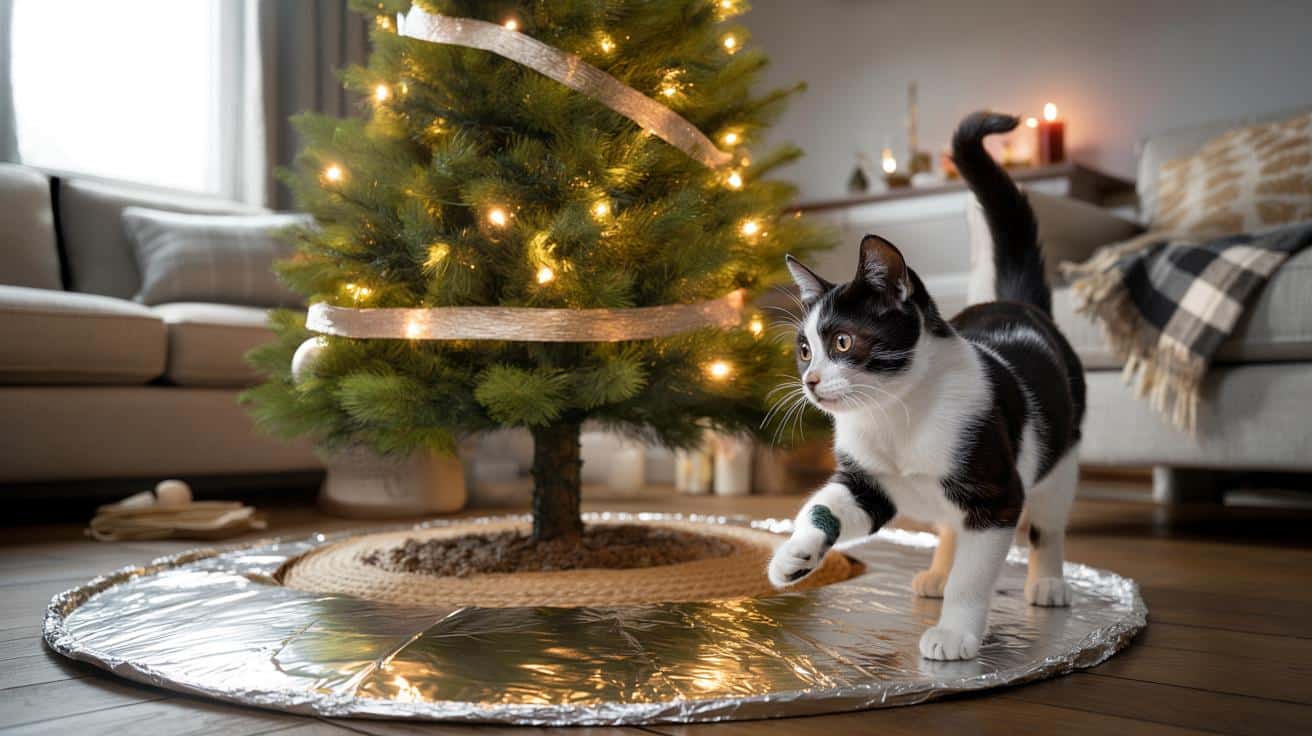
Marta in Turin told me her tuxedo cat, Lapo, treated the lower branches like his personal jungle gym. The first night, he flopped inside the tree and juggled a felt reindeer in his paws like a goalie. She laughed, then winced at the shattered bauble that followed. The solution arrived with a late-night grocery run and a roll of foil. She pressed it around the base, a silver guardrail. Lapo tested it, pawed once, then recoiled at the sharp sound and strange feel. That was the last raid.
Here’s the logic: cats navigate the world through touch and sound as much as sight. Foil is unpredictable underfoot. It compresses, hisses, and reflects light, which feels unstable and loud to a creature that loves silent, sure footing. Many cats also dislike the cold, slick texture. The effect isn’t punishment; it’s a sensory nudge that says, “this zone is weird.” Turn the lower third of the tree into a mildly confusing place and the target shrinks. Curiosity reroutes, energy diffuses, peace returns.
The aluminum foil trick: how to set it up
Start by building a clean, continuous barrier at the base. Tear wide strips and lay them in a horseshoe around the tree stand, then extend to make a full ring that overlaps your rug by a few centimeters. Crumple lightly so the surface isn’t flat; ridges amplify the sound. If your tree has a trunk gap, wrap a narrow band of foil around the lower trunk, just above the stand, like a silver collar. Line the underside of the tree skirt with foil so it remains hidden yet noisy. Add two or three thin tassels of foil on the lowest branches to detune the “prey” zone without turning the tree into a sculpture. For many cats, this is enough in 48 hours.
A few gentle adjustments make it stick. Replace flattened foil every couple of days in the first week, because quiet foil loses its bite. Leave no inviting gap; a paw-sized opening equals an engraved invitation. Elevate your wins by pairing the barrier with a toy burst at tree time, so your cat gets a better outlet. Rotate temptation: soft ornaments up high, heavier ones mid-level, no glass down low. Let’s be honest: nobody really does that every day. Aim for “good enough” and you’ll still be miles ahead.
Think of the foil as a short-term training wheel. Keep it through the novelty phase, then taper as your cat redirects to toys, window watching, or a scratch post. If your cat seems nervous near the tree, add a calm cue: a treat on a mat a few steps away, a slow blink, a soft voice, a circuit of play with a wand toy. The goal isn’t fear; it’s clarity.
“Foil changes the decision in the cat’s mind without a fight,” says a veterinary behaviorist I spoke with. “It’s a boundary that doesn’t yell.”
- Set the foil early—on the same day the tree goes up.
- Pair barrier + play to drain the “hunt now” urge.
- Lift or secure cords; add cord covers near the base.
- You can almost hear their paws deciding whether to pounce or retreat.
A calm holiday is possible
We’ve all lived that moment when the house goes still and you know the cat is thinking about the tree again. The foil trick buys you quiet, but the real gift is the reset it gives your routine. A five-minute chase with a wand toy before evening lights. A treat puzzle parked far from the cords. A sun-warmed perch that’s taller than the tree, so climbing feels complete. You shape the stage; your cat reads the cues.
| Point clé | Détail | Intérêt pour le lecteur |
|---|---|---|
| Build a foil moat | Crinkled ring around the base, no gaps, refreshed as needed | Cut down first contact with branches where chaos begins |
| Reroute energy | Play bursts at “tree time,” food puzzles, higher perch nearby | Gives your cat a better job than tree patrol |
| Make the tree safer | No glass low down, secure hooks, covered cords, steady stand | Reduces risk if curiosity still wins a round |
FAQ :
- Does aluminum foil really keep cats away from the Christmas tree?For many cats, yes. The sound and texture feel unstable underfoot, which discourages approach. It’s a gentle boundary, not a scare tactic.
- How should I place the foil for best results?Create a continuous ring around the base, lightly crumpled, with no gaps. You can also wrap a narrow band around the lower trunk and line the underside of the tree skirt.
- Will every cat respect the foil?Some bold or highly tree-motivated cats will step on anything. Add layers: double-sided tape on the stand, citrus peels near the base, or a motion toy away from the tree to redirect attention.
- Is foil safe for my cat and my home?Yes, when used flat on the floor and replaced if torn. Keep foil away from electrical outlets and ensure your cat isn’t chewing or ingesting pieces. Protect flooring with a thin mat under the foil if needed.
- How long do I need to keep the foil in place?Usually for the first 7–10 days, until novelty fades. Taper by shrinking the ring or switching to a foil-lined tree skirt once your cat loses interest.