When the streets are rimed with ice and your fingers can’t grip a key, the instinct is to spin the dial to “volcano” and stand there until you thaw. That jump—from frozen air to scalding water—feels like rescue, yet it can jolt the heart more than you think.
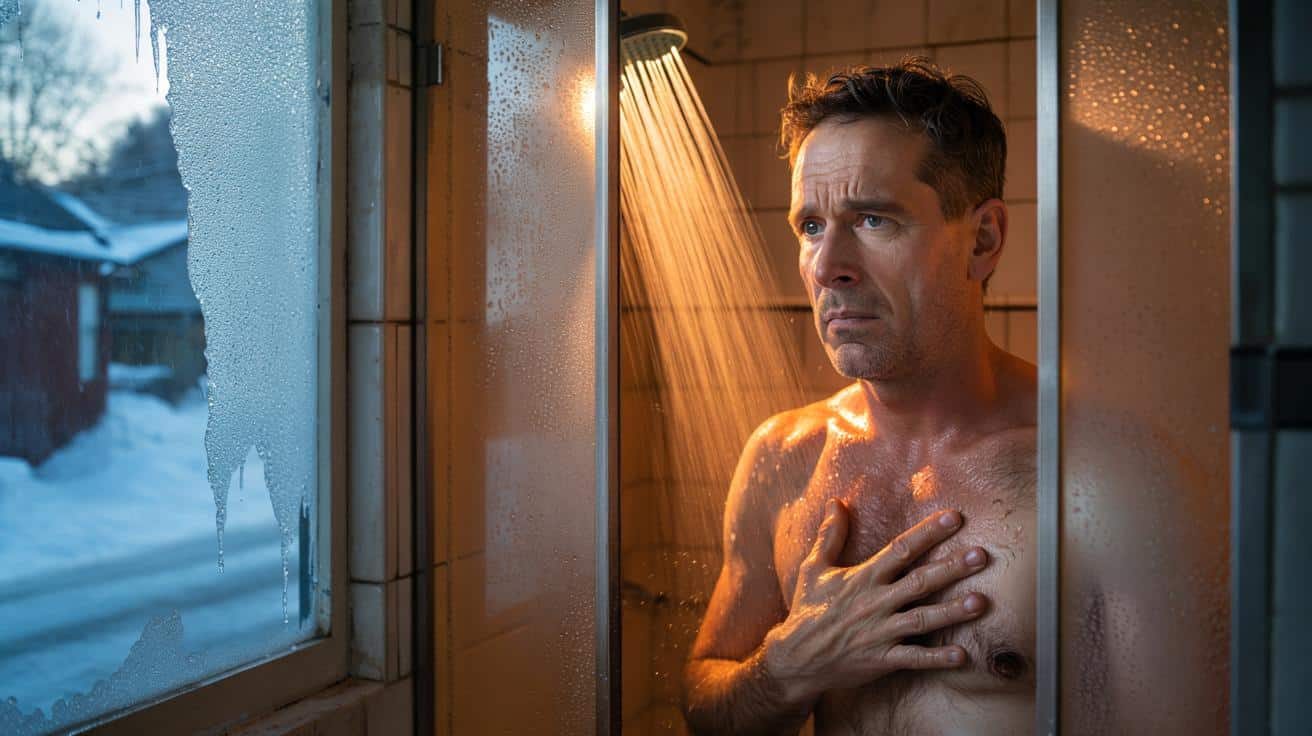
You lean into the spray, face tipped up to the heat, and for a heartbeat you feel your pulse skip, then thud, then race to catch up. The room is a cocoon, the glass opaque, the world outside a strip of white, and in this tiny weather system your body is trying to decide which season to obey—winter on your skin, midsummer on your chest. The danger hides between the drops.
When a scalding shower meets a winter body
Cold air tightens blood vessels like a drawstring; hot water snaps that string wide open. In seconds your blood pressure can dip, your heart speeds up to fill the gap, and your circulation feels like a rollercoaster just left the station. Your heart hates surprises.
Think of Marco, 54, who trudges home from a dim commute, shivering, hands numb, and heads straight for the hottest setting he can stand. Two minutes in, the room fogs, his chest feels tight, and a quick wave of dizziness has him gripping the wall. Epidemiologists keep finding the same pattern every winter: more cardiac events cluster in cold snaps, and temperature swings are part of the script.
That jolt has a name—thermal shock—and it’s basically your autonomic nervous system yanked from one lever to the other. Cold sparks constriction and raises pressure; a scalding pulse triggers sudden dilation and a pressure drop, and your heart floors the accelerator to stabilize flow. For most, the system rebounds, but if you carry coronary disease, high blood pressure, or a tendency to faint, that split-second seesaw can be the wrong kind of thrill.
Turn down the shock, keep the comfort
Build a gentle ramp instead of a cliff. Warm the bathroom first—space heater for a few minutes or close the door while you brush your teeth—so the air isn’t arctic. Start the water lukewarm and enter slowly, wetting feet and hands first, then legs and arms, then chest; nudge the temperature up in small steps over 60–90 seconds, and linger near 37–40°C rather than maxing the dial.
Hydrate before you step in, breathe through your nose, and sit on the edge of the tub if you feel lightheaded. Keep showers on the shorter side, five to ten minutes, and avoid blasting your neck and chest with the hottest jet right away. We’ve all lived that moment when the shower feels like the only answer after a bitter walk home. Let’s be honest: nobody really does that every day.
Listen to your body before you listen to the tap. If you live with heart disease, arrhythmias, or low blood pressure—or you’re older, pregnant, or recovering from illness—err on the side of mild heat and slow changes.
“Sudden temperature swings are like slamming the brakes and the gas at once,” says a preventive cardiologist I spoke to. “Most engines cope, but worn parts protest.”
- Pre-warm the room, then your hands and feet first.
- Raise heat gradually; aim for comfortable, not extreme.
- Keep it brief; sit if you feel woozy; leave the door slightly ajar.
- If symptoms repeat—dizziness, chest discomfort, palpitations—speak with a clinician.
What this ritual says about winter and the body
The winter shower is a small ritual that asks the heart to navigate weather inside and out. It’s comfort wrapped in steam, and also a reminder that the body runs on rules older than any thermostat. **Hot water feels glorious; your cardiovascular system may disagree.**
What helps is not fear, but rhythm: a kinder ramp, a slower start, a minute to let the pulse settle before the heat climbs. This isn’t about never taking a hot shower in your own home; it’s about removing the whiplash from an everyday act. **If you’ve ever felt your heart pound or your head swim under the spray, that’s useful data, not drama.**
The cold months make us chase extremes—icing winds outside, sauna heat inside—and the heart sits in the middle, keeping score with quiet stoicism. A few tiny tweaks shift the story from shock to ease, and may help the day feel steadier from the first sip of air to the last drop of water. Share the trick, pass the towel, keep the ritual, change the ramp.
| Point clé | Détail | Intérêt pour le lecteur |
|---|---|---|
| Gradual temperature ramp | Start lukewarm, heat up over 60–90 seconds | Reduces blood pressure swings and dizziness |
| Warm the room first | Close the door or pre-heat the bathroom | Less shock when you step in and out |
| Know your risk | Heart disease, arrhythmias, low BP need extra care | Helps tailor the shower to your body’s limits |
FAQ :
- Is a hot shower dangerous for the heart in winter?For most healthy people, not inherently. The risk grows when extreme cold meets scalding heat fast, or if you have heart disease, low blood pressure, or fainting episodes.
- What exactly is “thermal shock”?A rapid shift from cold-induced constriction to heat-induced dilation that can briefly drop blood pressure and provoke a racing or irregular heartbeat.
- How can I make my shower safer on freezing days?Pre-warm the room, start lukewarm, heat up gradually, keep it brief, and avoid blasting the chest and neck with the hottest jet at first.
- Who should be extra cautious?People with coronary disease, arrhythmias, heart failure, low blood pressure, older adults, pregnant people, and anyone who’s felt dizzy or faint in hot showers.
- When should I talk to a doctor?Recurring dizziness, chest discomfort, unusual shortness of breath, or palpitations during or after showers deserve professional guidance.