Leftover chocolate on the counter feels harmless — a casual end to a festive night. For a dog, it can be a trap laid in silence, sweet and deadly. A small mouthful is sometimes all it takes to turn a cozy kitchen into an emergency.
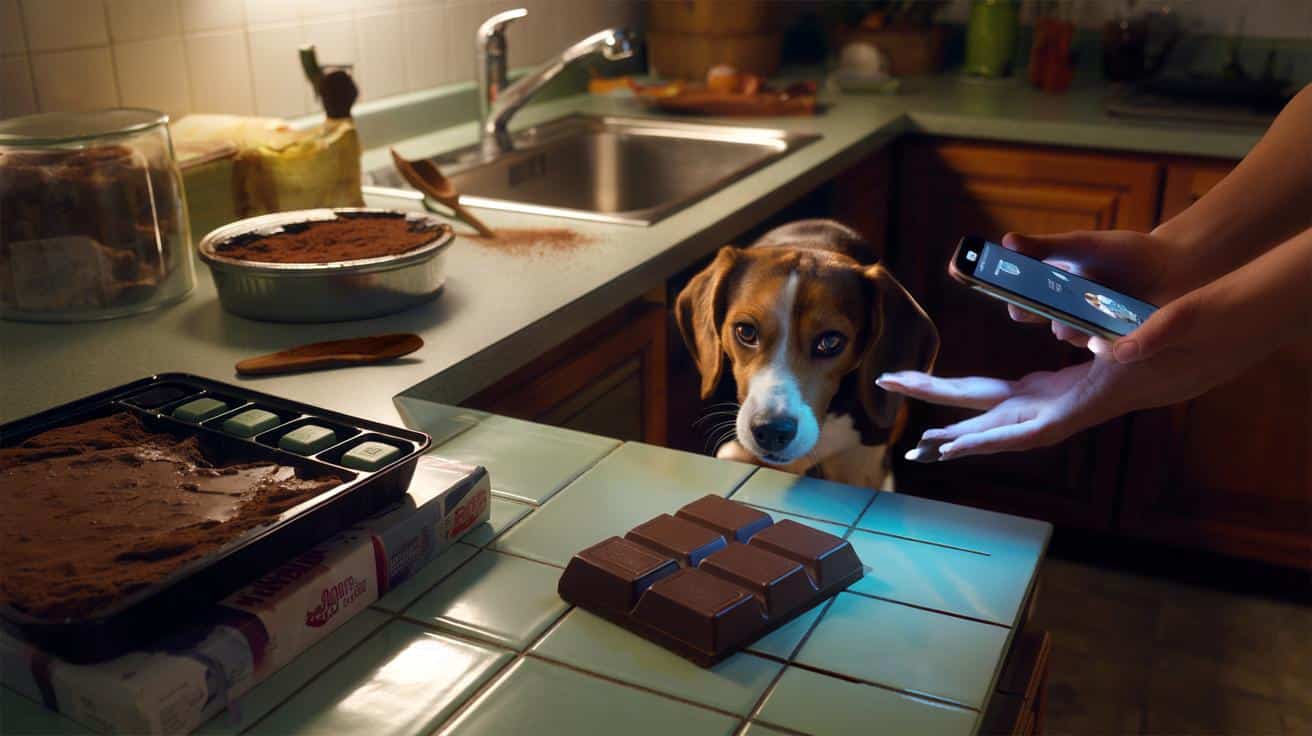
The dog, ears forward, drifted near the counter the way a tide slips up the shore — quiet, deliberate, nose working like a compass. I reached for the box at the same moment he rose on his back legs, and time did a strange, elastic thing: a polite party favor suddenly felt like a live wire. One chocolate fell, a neat square that clicked on the tiles, and he pounced as if it were a toy. I knocked it away with my foot, heartbeat doing cartwheels, and grabbed my phone with shaking hands. The light on the screen made the room look colder than it was. Something shifted in the air.
Leftover chocolate, real risk: how a bite becomes a crisis
Chocolate’s charm is built for humans — rich, bitter, sweet — but dogs read it differently. Their bodies can’t clear theobromine and caffeine well, so these stimulants linger and stack up, stressing the heart and brain. **Chocolate can kill a dog.** That sounds blunt, and it should, because the danger hides in plain sight: a brownie corner on a low table, a dark truffle forgotten in a coat pocket, a cocoa-dusted spoon in the sink.
Talk to any vet and you’ll hear a litany of “it happened so fast.” A beagle eats two squares of 85% dark and arrives trembling; a Lab downs a pan of brownies and looks fine, then crashes hours later. Numbers tell the story underneath the panic: theobromine per gram can run roughly 15–20 mg in cocoa powder, 14–16 mg in baking chocolate, 5–9 mg in dark, 1–2 mg in milk, and almost none in white. Toxic ranges for dogs start around 20 mg/kg (restlessness, vomiting), 40–50 mg/kg (cardiac signs), and 80–100 mg/kg (seizures, life-threatening). One small dog. One strong chocolate. That’s the math.
The biology is unforgiving. Dogs metabolize theobromine slowly — half-life near 17 hours — so what’s eaten at noon keeps firing at midnight and beyond. Signs often begin 2 to 12 hours after ingestion, right when you’re tempted to relax and call it a false alarm. The darker the chocolate, the tighter the fuse, with baking chocolate and cocoa powder packing the biggest punch per gram. Wrappers don’t help: the smell is heady, the texture inviting, the risk invisible until the shaking starts.
Make the kitchen dog-proof: simple habits that truly work
Start with gravity: move chocolate up, far, and shut. A sealed tin on the highest shelf beats a paper bag in a drawer by miles. Label a “dog-danger box” for all sweets and stash it behind a closed door, especially after guests arrive with surprises. When baking, keep a lidded container for cocoa and chocolate chips, and sweep the floor before you step away. **Minutes matter after ingestion.** Barriers like baby gates and closed pantry doors create a layer between curiosity and catastrophe.
We’ve all had that moment when the house is buzzing, plates move, and a dessert plate ends up within nose range. Gift boxes on the coffee table, brownies cooling by an open oven, truffles on the desk — they feel stable until a tail clears the edge. Let’s be honest: nobody actually does that every day. If you slip, act fast: remove access, check how much may be missing, and call your vet or a poison hotline right away. White chocolate isn’t “safe,” either; while theobromine is low, sugar and fat can trigger pancreatitis in sensitive dogs.
Every plan needs a backup for the 2 a.m. chaos. Keep these words on the fridge, not buried in a drawer.
“If your dog eats chocolate, time is your ally and your enemy: call us, tell us what type, how much, and when — we’ll do the math with you.” — an emergency vet nurse
- First, remove remaining chocolate and wrappers; snap a photo of labels (cocoa %, ingredients).
- Call your vet or a pet poison helpline; report your dog’s weight, chocolate type, estimated amount, and time since ingestion.
- Do not induce vomiting unless a professional directs you; wrong timing can cause aspiration.
- Watch for restlessness, vomiting, diarrhea, panting, pacing, rapid heart rate, tremors, seizures.
- If xylitol appears on the label, treat it as a separate emergency and say so clearly on the call.
Leftovers, love, and the quiet choices that keep joy intact
There’s a tenderness to leftovers — a promise that the night can stretch a little longer — and that’s where risk sneaks in. A kitchen that looks calm by daylight turns into a treasure hunt for a dog at 3 a.m. *Chocolate is joy for us, danger for them.* Small rituals protect both: a tin that clinks shut, a habit of counting truffles before tossing the box, a quick sweep of the floor when the last guest leaves. None of this steals warmth from a celebration; it preserves it. When you choose a safe swap, like carob treats for the begging gaze under the table, you’re still part of the feast, just not at their expense.
| Point clé | Détail | Intérêt pour le lecteur |
|---|---|---|
| Chocolate type matters | Cocoa powder/baking chocolate are most potent; milk is less; white is minimal theobromine | Quickly gauge danger from the label on your box |
| Weight and timing | Risk rises with mg/kg and 2–12 h delay; theobromine lingers ~17 h | Know when to watch, when to go, and why it escalates overnight |
| Prevention beats panic | High storage, lidded tins, gates, label photos, hotline numbers ready | Turn habits into safety nets that work even on hectic days |
FAQ :
- How much chocolate is dangerous for a dog?A lot depends on weight and cocoa content. As a rough guide, signs can start around 20 mg/kg theobromine; dark and baking chocolates reach that threshold fast.
- What symptoms should I watch for after my dog eats chocolate?Restlessness, vomiting, diarrhea, panting, pacing, rapid heartbeat, tremors, and seizures. Watch closely for 24 hours.
- Should I make my dog vomit at home?Only under direct veterinary guidance. The wrong method or timing can make things worse.
- Is carob a safe alternative treat?Generally yes; it contains no theobromine. Choose plain, dog-intended carob without xylitol or added sugar.
- Do cats face the same risk with chocolate?They’re also sensitive to theobromine but less likely to eat sweets. Keep chocolate away from all pets regardless.