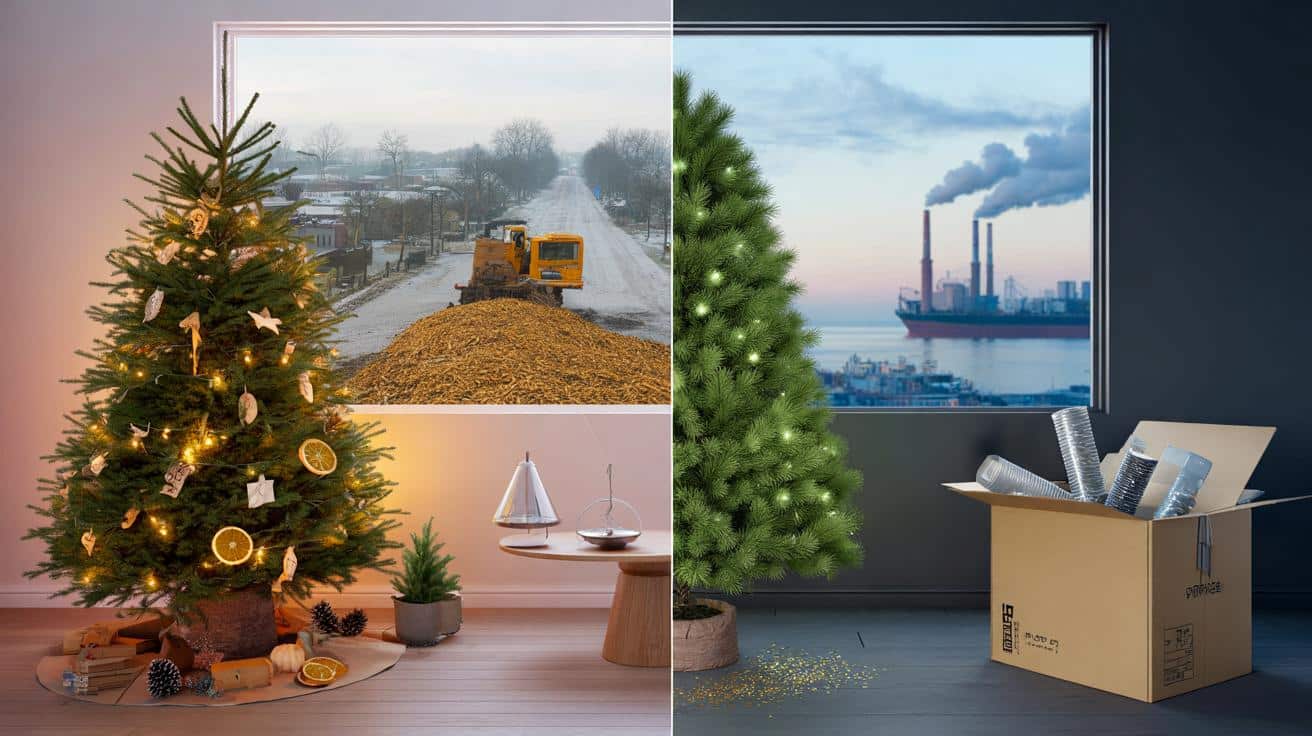
It sounds simple on paper, then you remember the pine scent in a living room and the box in the attic with twisted branches and a strand of tinsel that never quite lets go. One feels alive, the other feels pragmatic. Which one actually pollutes more when you look at the numbers?
It was a Tuesday night in early December, that damp cold that sticks to your scarf. A man in a wool cap lifted a spruce, spun it like a slow dancer, needles falling like confetti. Across town, a family opened a battered cardboard box and clicked together a plastic trunk with muscle memory and a sigh. The room changed in an instant, either way. The question hung in the air with the lights: which tree leaves the lighter footprint?
The data, translated to everyday life
Start with the carbon math. For a typical 2-meter real tree, the Carbon Trust estimates around 3.5 kg CO2e if it’s chipped or burned for energy, and up to 16 kg CO2e if it ends up in landfill where it emits methane. ADEME, the French environment agency, lands in a similar range and notes that transport and disposal swing the result. For a comparable artificial tree made of PVC and steel, lifecycle studies cluster near 30–40 kg CO2e at the factory gate, not counting years of use. The short answer: real trees usually emit less over one season.
Now bring in time. The American Christmas Tree Association cites LCA work suggesting an artificial tree starts competitive only when used repeatedly; many analysts peg the break-even around 10 years versus a real tree that’s locally grown and properly mulched. Carbon Trust cites 10–20 seasons depending on travel and disposal. If your plastic tree lasts 12 Christmases and your real tree would have been chipped each year, the carbon lines may finally cross. If it lasts three, they don’t.
Why the gap? Real trees are farmed crops that sequester carbon while growing and often use marginal land. The emissions come from machinery, fertilizer, transport, and what you do at the end of the holidays. Landfill is the climate villain because rotting tree waste releases methane, a greenhouse gas far punchier than CO2. Artificial trees are heavy on manufacturing energy and materials: PVC, steel, packaging, and shipping. Reuse stretches that initial bill across many years. Disposal decides the impact of a real tree.
How to lower your Christmas footprint, whichever tree you choose
If you love a real tree, buy local and plan its afterlife. Municipal chipping or home composting keeps emissions in the low single digits of kilos CO2e, according to Carbon Trust and ADEME ranges. A potted, living tree is another path: rent one, or keep a small rooted tree and bring it in for a week each year. Skip landfill at all costs and check city pickup routes that promise chipping for mulch. Little choices stack: shorter drives, no fake snow, and LED lights that sip power.
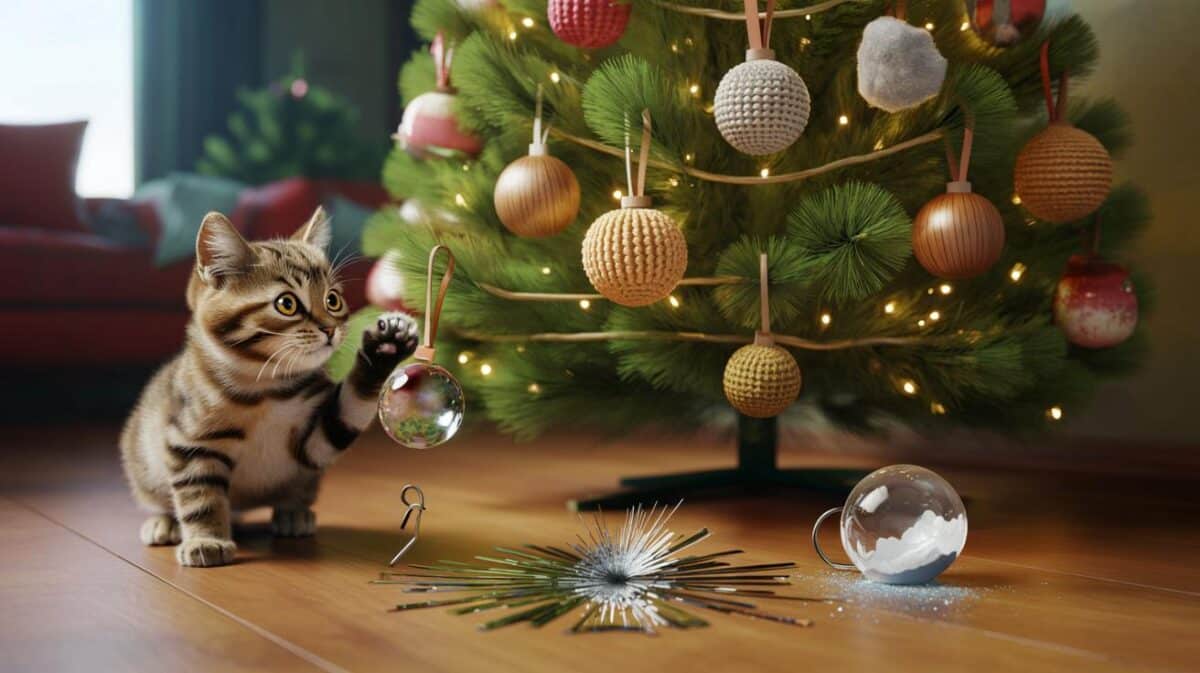
If you already own an artificial tree, your gold medal is longevity. Store it carefully in a dry box, avoid bending branches to death, and mend broken sections with spare wire instead of binning. We’ve all had that moment where a snap decision feels easier than a repair. Keep the ornaments light to reduce strain, and go easy on glitter that sheds microplastics. Let’s be honest: nobody does that every day. Still, a few minutes of care can add years.
There’s a steady truth in the data and the stories we trade around dinner tables.
“The greener tree is the one you don’t waste,” the line goes, and it holds up whether it’s pine-scented or PVC.
Think of it as a small kit for a calmer footprint:
- Real tree: buy local, chip or compost, never landfill
- Potted or rental: keep it outdoors most of the year
- Artificial: reuse 10–20 years, store well, avoid glitter spray
- All trees: choose LEDs, set timers, decorate with natural or reusable materials
If you already own an artificial tree, the greenest move is to keep using it.
Numbers with soul: what they mean in daily life
Here’s the quieter part no one posts on Instagram. A 2-meter real tree that’s chipped might clock roughly 3–5 kg CO2e. Add a 20 km round trip by car and you nudge that number upward. Landfill, and you could quadruple it to the teens because methane hits harder. An artificial tree often starts life at around 30–40 kg CO2e, but if it brightens your living room for 12–15 seasons, you’re folding that number into a modest two or three kilos per year. The scent and the story matter to us; the math just asks for consistency.
Another layer people feel but rarely name: chemicals and materials. Real-tree farms can use pesticides and fertilizer, though certification schemes and integrated pest management keep inputs in check. Artificial trees lean on PVC, which isn’t widely recycled at curbside and can shed microplastics from tinsel and garlands. Neither is perfect, and that’s human. *The point is not purity; it’s direction.* Small shifts compound, like trading aerosol snow for paper stars or skipping one long cross-town drive.
Lights and energy play a cameo, too. A string of LEDs, on a timer, draws so little that the tree choice usually dominates your holiday footprint. If you want a simple rule you can repeat out loud, try this: chipped real beats landfilled real, and long-lived artificial can beat real if it truly lasts. The rest is your life, your family, your rituals. And yes, the needles on the carpet are still a thing.
Where this leaves us
The choice is less a verdict on Christmas and more a vote for a habit. If a real tree brings you joy, pick one grown nearby and make its last day a trip to the chipper, not the bin. If the artificial one in your attic feels like an old friend, keep it going and tell the kids why longevity is a superpower. Trends come and go. The math keeps whispering the same refrain: waste less, reuse more, travel shorter, light smarter. That’s not austere. That’s festive with a memory.
| Point clé | Détail | Intérêt pour le lecteur |
|---|---|---|
| Real vs fake: carbon | Real tree ~3.5–16 kg CO2e depending on disposal; artificial ~30–40 kg upfront | Know which option is lighter in typical scenarios |
| Break-even years | Artificial needs roughly 10–20 seasons to compete with a locally sourced, chipped real tree | Decision guide if you already own or plan to buy artificial |
| Actions that matter | Chipping/composting real trees; long-term reuse and careful storage for artificial; LED lights | Concrete steps that cut emissions without killing the vibe |
FAQ :
- Which tree pollutes more overall?Per season, a real tree that’s chipped or composted typically emits less than an artificial tree used for only a few years. Long-lived artificial trees can catch up over 10–20 years.
- How many years should I keep an artificial tree?Most LCAs suggest at least a decade, often closer to 15–20 years, to beat the average real tree that’s locally sourced and properly disposed of.
- What’s the best way to dispose of a real tree?Use municipal chipping or composting programs, or cut it up for home compost. Avoid landfill to prevent methane emissions.
- Are pesticides on real trees a big issue?Practices vary. Look for certified or locally grown trees, ask growers about methods, and note that farms often occupy marginal land and provide habitat between rotations.
- Do lights and decorations outweigh the tree’s footprint?LEDs on a timer use little energy. What can add up is long-distance travel, aerosol snow, and glittery microplastics. Choose durable, reusable decor and keep the journey short.