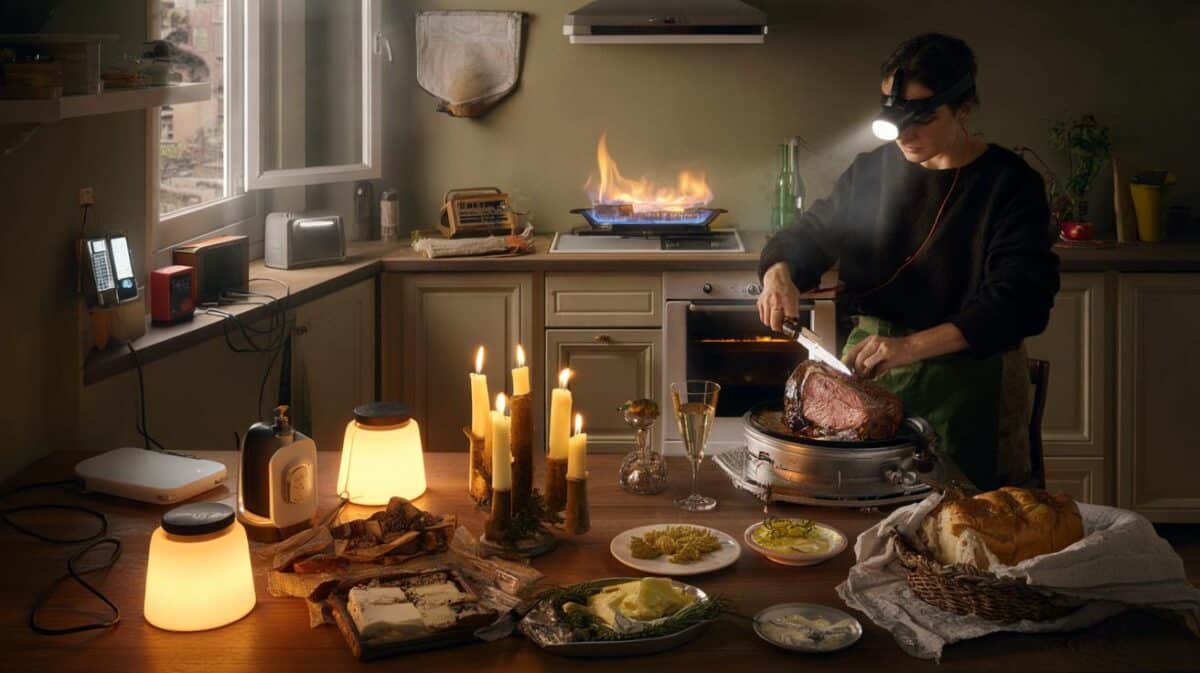
Old jokes land a little too hard, politics sneaks in with the gravy, and one offhand comment about parenting, money, or tradition can set the tree lights humming with tension. The trick isn’t to win. It’s to not take the bait, while keeping the warmth of the room.
The ham is still steaming when Uncle Marco starts in on “how things used to be.” Your cousin tightens, your mother glances at the ceiling, and the chair legs make those tiny squeaks that say everyone’s bracing. You can feel it rising—the blood in your ears, the infinite responses lining up like toy soldiers. We’ve all already lived that moment when a word turns a whole evening. You take a breath, lift your glass, and say, “I really want tonight to feel good for everyone. Can we park this until tomorrow?” The room softens, just a little. He shrugs. The cousin smirks. The ham keeps steaming. Something almost tender returns. There’s a quiet skill at play here. A kind of gentle magic.
Why holiday arguments flare—and where your words can help
Big gatherings revive old roles. The eldest becomes the decider, the youngest becomes the target, and the sibling who moved away becomes the stranger with ideas. Add high expectations, low sleep, and a touch of wine, and small differences sound like verdicts. It’s not just content that hurts. It’s tone, timing, and the old choreography.
Picture a table in Verona last year. Two brothers shifted from football to politics in a single forkful. Voices went up, jokes went down, and the aunt with the best panettone lost her appetite. Nobody left more informed. Everyone left a bit bruised. Surveys consistently show that holiday stress spikes not because of gifts, but because of conversations that don’t know when to stop.
Conflict in families often isn’t about ideas—it’s about belonging. When someone feels unseen, they get loud or sharp. When someone feels cornered, they get cold or clever. What cools the room isn’t a better argument. It’s a message of safety: I’m with you. I’m still here. Your words can deliver that message in seconds. Like a hand on the shoulder, but verbal.
The magic phrases that lower the heat without losing yourself
Think of a three-step reset you can reach for: Clarify, Pause, Redirect. Clarify signals respect: “I want to understand what you mean.” Pause slows the loop: long exhale, sip of water, a small nod. Redirect moves the energy without shaming: “Could we put this on the shelf till after coffee?” These three beats, delivered calmly, flip the moment from duel to duet.
Use “and,” not “but.” “I disagree, and I care about you.” Try name + gratitude + boundary: “Zia Rosa, I love how direct you are, and I’m not talking politics tonight.” Sandwich a limit with care: “I want this to be fun. That topic gets heated for me. Let’s save it for another day.” Soyons honnêtes : personne ne fait vraiment ça tous les jours. Practice it once in the mirror. The words will feel less strange when the casserole hits the table.
Sometimes you need lines you can grab fast. A few that work like a warm blanket and a soft brake at the same time.
“I care more about staying close than being right.”
- “I hear this matters to you. I’m not going to debate it tonight.”
- “Interesting. What life experience led you to that view?”
- “I might be wrong. Here’s how it looks from my seat.”
- “I love you. I’m taking a five‑minute breather and coming back.”
- “We disagree, and I still want tonight to feel good.”
How to hold your ground and keep the room gentle
Set a soft boundary before the meal. A text in the morning to a likely sparring partner can be gold: “Excited to see you. I’m keeping tonight politics‑free so I can fully enjoy you.” During the dinner, use the quiet tools—slow breathing, feet on the floor, eyes to the window for two seconds. Your nervous system sets the tone before your mouth does. And have an exit line ready: “I’m going to help with the coffee—be right back.”
Watch for classic traps. The challenge masked as a joke. The “prove it” demand. The bait of “so you’re saying…”. Don’t step in. Replace explanation with curiosity: “What’s the part you’re most worried about?” Replace rebuttal with values: “I want family closeness more than consensus.” Replace performance with presence. Strong doesn’t always look loud. Strong can look like choosing to breathe.
Body language does a lot of heavy lifting. Shoulders down. Palms visible. Aim for a slower voice, slightly softer than the room. Curiosity is disarming. Try this tiny script when things go spicy: “I’m hearing how much this matters. I’m not ready for this talk tonight. Tell me one thing you’re excited about this week.” And one more lifeline for your pocket: You can leave the room without leaving the relationship. If all else fails, hold your water glass, nod once, and say, “Let’s circle back another day.” Silence, used on purpose, is not surrender.
Leaving space for grace
There’s a particular kindness in choosing not to win. It feels like a small loss in the moment, then pays back in warmth, in ease, in stories you can still tell together. When you say “I want this to feel good,” you offer everyone a step down from the ledge. Pride often keeps us perched. A friendly sentence is the handrail.
Hold the season like a fragile dish you’re carrying to the table. That means stabilising your grip, not clenching harder. Maybe your “magic phrase” isn’t magic at all. Maybe it’s ordinary, a little awkward, human. The point is not perfection. It’s direction. A few words that keep the light in the room, and the door open for tomorrow.
| Point clé | Détail | Intérêt pour le lecteur |
|---|---|---|
| Reset in three beats | Clarify, Pause, Redirect with short, concrete lines | Gives a simple script when emotions spike |
| Boundaries that breathe | Name + gratitude + limit, delivered calmly | Protects your peace without shaming others |
| Exit without rupture | Pre‑planned exit lines and brief breaks | De‑escalates while keeping connection alive |
FAQ :
- What do I say if someone mocks my boundary?Answer with warmth and a repeat: “I get that it sounds odd. I just want tonight relaxed. I’m not talking politics.” Then pivot: “Tell me about your new project.” Boundaries often need repetition, not explanation.
- How do I handle a hurtful joke at my expense?Use the light‑firm combo: “I know it’s a joke. I don’t like being the punchline.” Offer an alternative: “Tell that story about Nonna’s scooter—way better.”
- What if I explode before I catch myself?Repair fast, then reset: “That came out sharp. I’m sorry. I care more about us than the topic. Can we pause this?” Name the rupture, then offer a path back.
- Can I just avoid the dinner entirely?Sometimes distance is the kindest choice. If you skip, add care: a call, a card, a small gift sent ahead. Silence, used on purpose, is not surrender. It can be strategy and self‑respect.
- How do I support a partner who’s being cornered?Become their calm echo: touch their shoulder, speak “we” lines. “We’re not discussing that tonight. We’re here to enjoy you all.” Then redirect the room with a toast or a memory.