Milk turns suspiciously warm, the freezer shrugs and softens your ice cream, and a gentle panic sets in. The outside cold has pulled a trick on the inside cold, and the machine doesn’t know which temperature to obey.
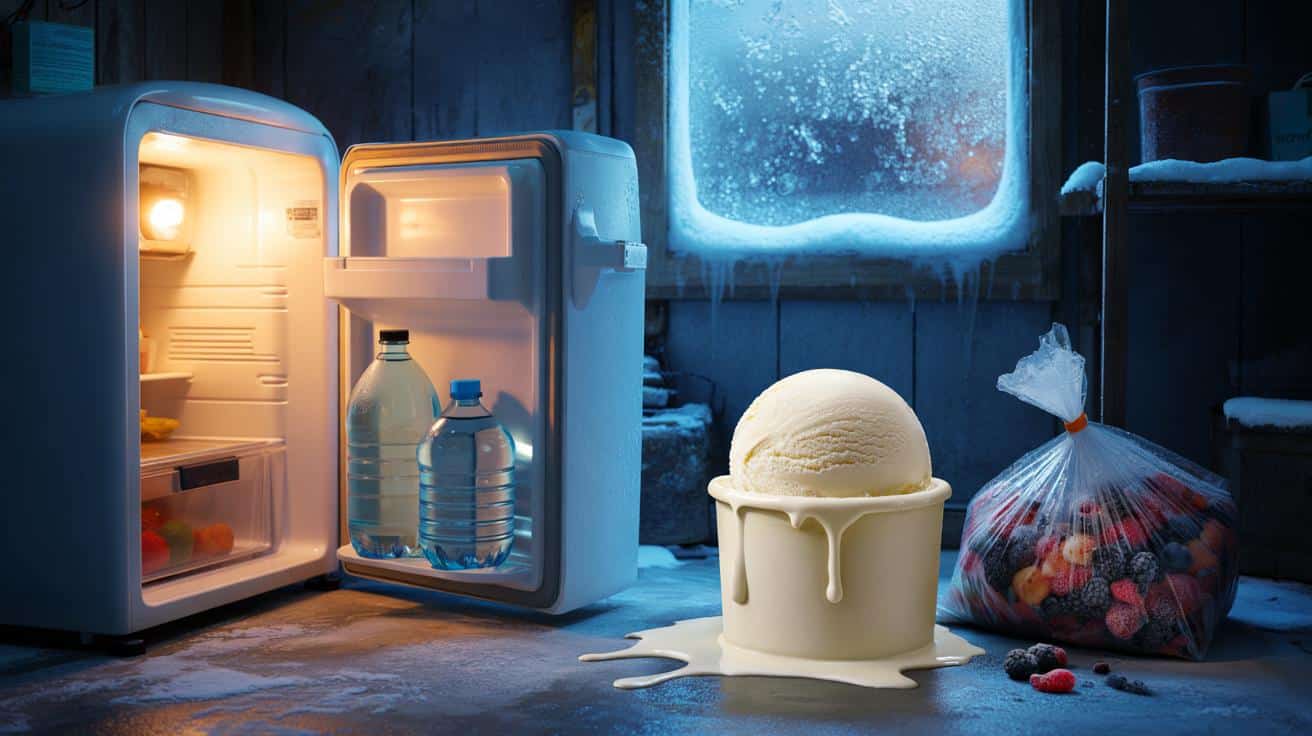
I remember a January morning that smelled like sawdust and coffee, standing in a dim garage in Turin. Frost scribbled across the window, and the fridge sat there like a stubborn cat, lights on, not doing much. The freezer had wept overnight; berries were glossy with thaw, milk felt room-ish, and the motor hadn’t kicked on in hours.
Winter can make a perfectly good fridge look broken. It happens in porches, sheds, basements, even unheated city kitchens. You jiggle the dial, you tap the door, you swear quietly. The air outside is colder than the air the thermostat thinks it needs. The cold turned your fridge warm.
Il paradosso del frigorifero, in plain English
Most household fridges don’t measure the cold where you’d expect. They sample the temperature in the fresh-food compartment, not in the freezer, and they tell the compressor to run only when that upper area creeps above its setpoint. If the room around the fridge drops to near-fridge temperatures, the control thinks, “We’re good,” and never calls for cooling. That means the compressor stays off, which starves the freezer of cold air. Your peas rise toward zero and beyond while the milk sits there, smug at 4°C.
In northern Italy and across the Midwest, appliance techs hear the same winter story. A family parks an extra fridge in the garage for holiday overflow, then a cold snap drags the ambient to 0–5°C. The fresh-food compartment chills passively through the cabinet walls, holding at the target without help. Since the thermostat never trips, the freezer’s temperature slowly climbs from -18°C to -5°C and then to soft-serve territory. Service calls spike after the first hard frost; call centers quietly call this the “garage fridge week.” We’ve all had that moment when a simple machine starts to feel mysterious.
There’s more depth to the paradox than one lonely sensor. Single-evaporator designs route cold air from a shared coil, so no compressor run means no freezer cooling. Defrost cycles still happen, adding a nudge of warmth. Low ambient can also mess with refrigerant pressures, especially on older capillary systems, making starts lazier and runs shorter. Dual-evaporator or “garage-ready” models manage better, since they can cool zones independently or include heaters to fool the thermostat. The headline remains the same: the fridge isn’t warm because winter is stronger, but because winter tricks its brain.
What to do when the cold outside steals the cold inside
The simplest fix is location. If you can move the fridge to a space that stays above 10°C, the controls will behave, the compressor will cycle, and the freezer will stay frosty. Not possible? Add a “garage kit” or a small warming pad around the thermostat area on compatible models. That gentle heat keeps the control honest, so it asks for cooling. A low-watt incandescent bulb (15–40 W), placed safely near the fresh-food thermostat, can mimic the same effect on older units. Add two large jugs of water on the fridge shelf to increase thermal mass, smoothing temperature swings and nudging the system to run.
Dial choices matter. If your freezer is thawing while the main compartment holds steady, try setting the fridge a notch warmer, not colder, which sounds backwards but encourages longer compressor cycles in many designs. Keep vents clear, clean the condenser coils, and give the machine 5–8 cm of breathing room. Don’t drape blankets or cardboard over the back to “insulate” it; that suffocates the condenser and shortens compressor life. Let’s be honest: nobody really does that every day. A monthly dust-off beats a midwinter meltdown.
Your goal is to make the fridge “think” it needs to work again, without creating hazards or cooking the cabinet.
“Cold garages fool warm controls,” says a veteran technician I met on a sleet-soaked call. “Either warm the control slightly or warm the space a little. The freezer will thank you.”
- Relocate to a room above 10°C if possible; if not, add a manufacturer-approved garage kit.
- For older fridges, use a safe, low-watt heat source near the thermostat, never inside a closed cavity.
- Increase thermal mass with water jugs; avoid blocking vents and check door gaskets for gaps.
- Choose garage-ready models or dual-evaporator designs for outbuilding installations.
The bigger picture hidden in a humming box
There’s a small life lesson wrapped in this chilly puzzle. We assume more cold always equals better cold, yet the fridge is a balancing act of physics and perception, of sensors looking in the wrong place and cabinets losing heat to the room. Your kitchen appliance is a weather story in miniature, a quiet negotiation between two climates drawn across one thin sheet of steel.
This is the “paradox” part: the colder the room, the lazier the cooling cycle, so the freezer warms while everything feels colder overall. It’s funny until a tub of gelato slides into mush. It’s expensive when frozen meat crosses into the danger zone and never quite tastes the same again. It starts as a nuisance and turns into waste.
Think about where you park your machines. Think about what else in your house relies on a sensor that only sees part of the picture. The fix might be a small bulb, a new model, or a move to a warmer corner, but the habit you build is bigger than that. You’ll start listening for the compressor at night, noticing how long it runs after you stock the shelves, paying attention to the texture of the cold. The paradox will still be there. You’ll just live on the right side of it.
| Point clé | Détail | Intérêt pour le lecteur |
|---|---|---|
| Why the fridge “warms” in cold rooms | Fresh-food thermostat never calls for cooling, so the freezer starves | Explains the paradox and stops panic buys |
| Signs and symptoms | Quiet compressor, soft ice cream, milk still cool, frost patterns changing | Helps diagnose quickly without a technician |
| Fixes that actually work | Garage kits, safe micro-heating, thermal mass, better placement, garage-ready models | Saves food, time, and the cost of a premature replacement |
FAQ :
- Why does my garage fridge stop cooling in winter?Because the thermostat reads the fresh-food section, which passively stays cool in a cold room, so the compressor doesn’t run and the freezer warms.
- Can I put a space heater near the fridge to fix it?Yes, but use low heat and keep safe distance; aim to warm the control area, not the whole cabinet. Purpose-built garage kits are safer and cleaner.
- Will turning the dial to “colder” help?Often the opposite works. Slightly warmer fridge settings can extend compressor run time, which brings the freezer back down.
- Do all fridges have this problem?No. Garage-ready or dual-evaporator models handle low ambient better. Older single-evaporator units are the most affected.
- Is thawed, refrozen food still safe?Meat that rose above 4°C for hours can be risky. If in doubt, discard. Ice cream that softened and refroze loses texture more than safety.