The light feels thinner, the hallway smells faintly of wool, and the termosifoni start whispering again. I watched a neighbor twist the big shiny head on her radiator, frowning at the numbers, then drift away. On the other side, a small plastic cap sat there, dusty, ignored. The “other” knob. The one no one touches.
The radiator knob you almost never touch
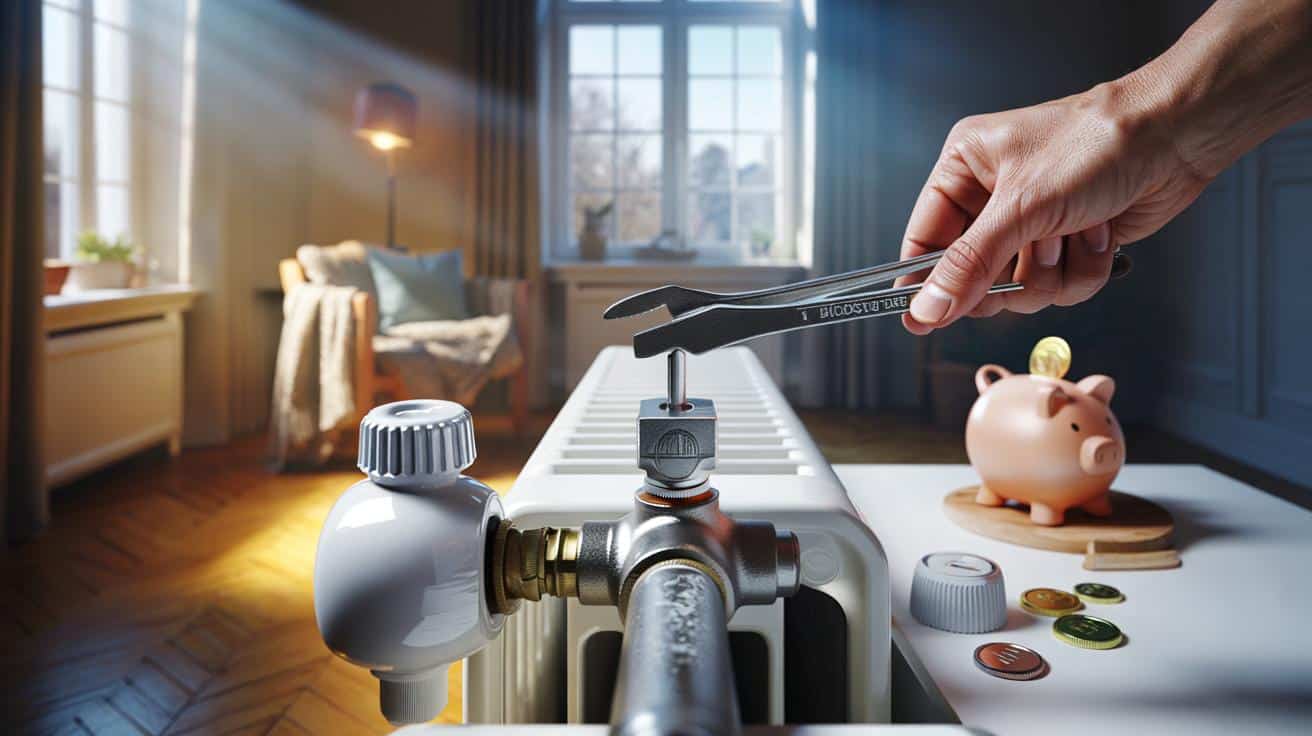
Every radiator has two ways in and out for hot water. One gets all the attention: the handwheel or thermostatic head you spin from 1 to 5. The other sits low, quiet, and anonymous. That second control is the **lockshield valve**. It doesn’t look like a knob. Sometimes it’s a capped stem or needs a little spanner. And yet it decides how much water your radiator actually receives, which rooms get priority, and how your boiler breathes.
I met Lucia in a century-old apartment in Bologna, oak floors and tall windows that leak stories and heat. Her living room roasted. Her bedroom sulked at 17°C. She tried everything: curtains, thermostat nudges, slippers. A plumber friend popped the cap on the “mystery valve,” gave the living room radiator a quarter turn closed, opened the far bedroom half a turn, and told her to wait. Over the next month, her smart meter showed fewer kWh than the same period last year with similar weather. Not a miracle, just less waste and calmer heat.
Here’s why that little valve matters. Water in a central heating system follows the easiest path. Without balance, nearby radiators gulp, distant ones sip. The lockshield controls flow, not temperature. By trimming the flow on radiators that heat too fast, you push more warmth to the laggards. Your boiler sees cooler water coming back, which helps a condensing boiler recover latent heat when the return stays below roughly 55°C. Less cycling, steadier rooms, fewer sighs at the bill.
How to use it without calling a plumber
Start simple. Bleed the radiators so they’re full of water, not air. Open every room’s main radiator control to max so flow is unrestricted on that side. Set the boiler to a moderate flow temperature, say 60°C, and let the heating run. Now find the lockshield on each radiator: usually the valve opposite the handwheel, sometimes capped. Begin with the radiator closest to the boiler. Turn its lockshield clockwise until it stops, then back a quarter turn. For rooms that heat slowly, open more; for rooms that roast, close slightly. Small moves. Wait 10–15 minutes between tweaks.
Trust your hands if you lack tools. The pipe going into a radiator should feel hot; the one coming out should be warm, not scalding. A rough target is a 12–20°C drop across the radiator once the system settles. An inexpensive infrared thermometer helps. We’ve all had that moment where the living room feels tropical and the bedroom is Siberia; balancing is how you bring them into the same climate. Let’s be honest: nobody does this every day. Do a patient session at the start of the season, then leave it alone.
“Balancing is 80% patience and 20% quarter turns. The trick is to wait for the system to respond before judging your last move,” a veteran installer told me.
- Target a 12–20°C drop across each radiator once warm.
- Near-boiler radiators often sit nearly closed (¼ turn); distant ones more open.
- Make tiny turns, then wait 10–15 minutes before the next change.
- Mark final positions with a pen so you can return to them.
- If you’re on district heating or see sealing paint, ask your building manager.
Small knob, big bill impact
Hidden valves change how a home hums. When radiators are balanced, the boiler runs longer, steadier cycles, and can condense for more of the burn. Fewer start-stop bursts. Less whoosh, more whisper. Rooms stop fighting each other, and you stop overcompensating with higher thermostat settings that spike your usage. *It’s the kind of tiny ritual that makes a home feel cared for.*
There’s also a quiet side effect: comfort. Even heat lets you live at a slightly lower average temperature without feeling chilly. Pair that with a smart but humble move on the boiler itself—**lower flow temperature** on milder days—and you’ll often see stronger savings than any gadget promises. No drama. Just a discreet twist where no one looks. The little knob by your termosifoni isn’t glamorous, but it’s where waste goes to retire.
| Point clé | Détail | Intérêt pour le lecteur |
|---|---|---|
| Identify the forgotten control | The lockshield is the capped valve on the return side | Know what to turn, and what to leave alone |
| Balance method | Small quarter turns, wait between adjustments, aim for 12–20°C drop | Practical steps you can do in one afternoon |
| Extra win | Combine balance with a modest boiler flow temp reduction | Stack savings without sacrificing comfort |
FAQ :
- What is the lockshield valve, exactly?It’s the flow limiter on the return side of a radiator. Unlike a thermostatic head, it doesn’t read room temperature. It controls how much hot water passes through, which lets you **balance your radiators** so each room gets its fair share.
- Can I damage anything by turning it?If you make small adjustments and don’t force it, you’re fine. Count your turns, take a photo before you start, and move in quarter-turn steps. If a valve is stuck, corroded, or sealed with paint or a tag, stop and get help.
- Do I still need thermostatic radiator valves (TRVs)?TRVs are great for room-by-room control, but they don’t balance a system on their own. Lockshields set the flow baseline. TRVs then fine-tune comfort by reacting to the room’s heat gains and sun.
- How long should balancing take?For a typical flat with five or six radiators, set aside an hour or two. The waiting is the longest part. Warm the system, tweak, wait, then tweak again. Once it’s right, you won’t have to redo it for years.
- What about the boiler settings?After balancing, try nudging the boiler’s flow temperature down, especially in shoulder seasons. Many modern condensing boilers use less gas with cooler return water. Keep comfort first, and step down gradually.