Cimici (stink bugs) aren’t out to haunt your evenings, yet they march across walls like they pay rent. The real trick isn’t killing them or masking the smell. It’s guiding them out—calmly, cleanly, and for good.
A shield-shaped silhouette lands on the white wall, as if it owns the place. You freeze, because you know the rule: crush it and the room will smell like a broken herb jar.
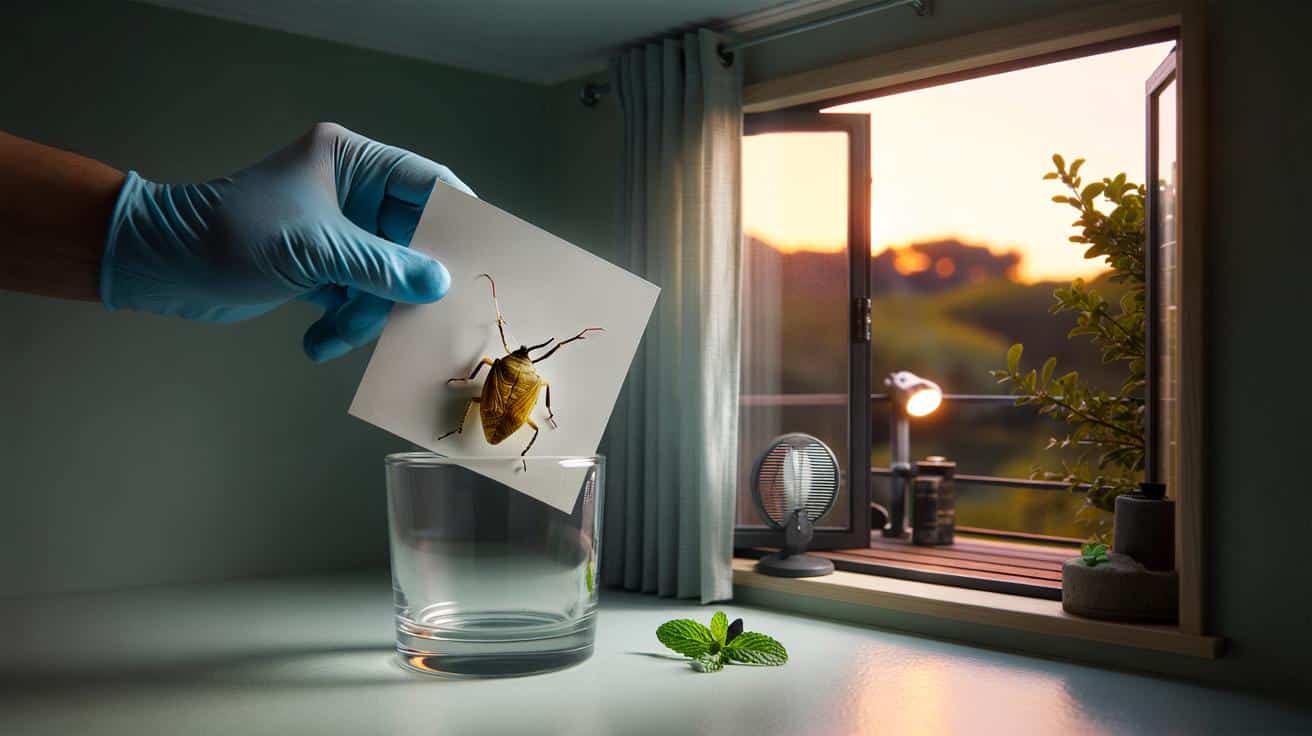
I grab a glass and a postcard, moving slow. The cimice inches forward, front legs testing the edge. I slide the card under the rim, open the balcony door, and let the night air swallow the warmth behind me. A small helicopter lift, and it’s gone.
We’ve all had that moment when a bug appears right as guests ring the bell. It doesn’t have to turn into flapping arms and frantic sprays. There’s a quieter way.
Why cimici find your home—then refuse to leave
As autumn leans in, cimici look for steady warmth and shelter. Your house is a lighthouse: bright at dusk, warm along sun-baked walls, full of tight gaps that feel like tree bark. They slip in through window frames, vents, and that hairline crack you stopped seeing years ago.
Watch their timing and you’ll notice a pattern. They appear on the sunny side in late afternoon, then wander toward lit rooms after sunset. One reader told me her “infestation” vanished the week she switched off a hallway lamp that glared at the window. Nothing magical—just less invitation.
Their smell is a defense, not a hobby. Think of it like a seatbelt alarm: squeeze them, startle them, or trap them in a roaring vacuum, and it goes off. **Crushing almost guarantees the smell.** Move slow and keep them upright, and they often stay quiet. They aren’t nesting in your sofa or laying eggs in your curtains; they’re just waiting out the cold.
The no-kill, no-smell playbook
Build a soft-capture kit: a wide-mouthed jar (or glass), a stiff postcard, thin gloves, and a headlamp. Dim the room, crack a window, and place the jar over the cimice. Slide the card gently to close the door, keep the bug walking forward, then carry it outside. Release it on a shrub or tree at least 10 meters from your door. For multiple cimici, set a small lamp by an open window as a beacon, keep the room dark, and guide them out one by one.
Skip the vacuum—loud air plus tumbling equals scent blast. Don’t blow on them, don’t flick them, don’t trap them under hot lights. Lightly misting a window frame with diluted peppermint can nudge them to move without harming them. Let’s be honest: nobody does this every day. Choose your battlefields—windows, door frames, and the one room they love—and keep those zones in shape.
Think in terms of friction: fewer invitations, more gentle exits. **Light management is the quietest repellent you own.**
“Move slowly enough and they won’t fire the scent glands. Make your space boring, and they’ll look elsewhere,” as one urban entomologist likes to say.
- Patch or replace torn screens, add door sweeps, and close 3–5 mm gaps with silicone or low-expansion foam.
- Use warm/amber outdoor bulbs instead of bright white that pulls them in at night.
- Create a “fan curtain” on a favored window—low, steady airflow discourages landing.
- Swipe diluted peppermint along frames as a gentle deterrent; reapply weekly in season.
- If you try traps, keep them outside only, away from doors, so you don’t attract more inside.
Living with autumn visitors, without losing your calm
Once you see cimici as seasonal commuters, the panic fades. You’re not “under attack”; you’re offering an exit. Shift the light so outdoors is the stage. Give them a path. Tighten the rooflines of your life—screens, seals, and a simple jar on standby—and the rhythm changes.
*It turns out the calmest hands win.* The scent isn’t inevitable, it’s a reaction to chaos. Keep your gestures unhurried. Choose a release spot you’ll always use, so your body learns the route. You’ll feel the room exhale the first time the wall stays clean and the air stays neutral.
What starts as pest control becomes small design: warm bulbs on the porch, cool darkness by the window, a fan that whispers “not here.” Share that soft-capture kit with a friend. Turn an annoying moment into a trick you’ll pass on at dinner, between the salad and the stories.
| Point clé | Détail | Intérêt pour le lecteur |
|---|---|---|
| Soft-capture method | Jar + postcard, dim room, open window, slow release 10 m from the door. | No scent, no mess, bug stays alive, house stays calm. |
| Light strategy | Dark indoors near windows at dusk, warm/amber bulbs outside as decoys. | Fewer indoor landings, fewer nightly surprises, easier guiding. |
| Exclusion basics | Repair screens, seal 3–5 mm gaps, add door sweeps, fan curtain on hot spots. | Stops repeat entries, reduces work long-term, humane and clean. |
FAQ :
- Do cimici bite or carry diseases?They don’t bite people or pets, and they don’t spread diseases indoors. At worst, they can stain fabrics and release a strong odor when stressed.
- What’s the fastest no-smell way to remove one?Use the jar-and-card: cover, slide, lift, release outside on a shrub. Dim the room and open a window first so the temperature and light guide the bug outward.
- Are essential oils safe to use as repellents?Diluted peppermint on frames can deter cimici. Keep oils away from cats and small pets, and test a hidden patch on surfaces to avoid stains or reactions.
- Where should I release them so they won’t come back?Pick a tree or dense shrub 10–15 meters from your door or windows. Release them gently onto leaves, ideally on the side away from the house lights.
- Is vacuuming a good idea if there are lots of cimici?It’s fast, but it often triggers the smell and can make your vacuum stink for weeks. If you must, use a stocking in the hose to catch them and release outside—yet for no smell, stick with soft capture and light control.