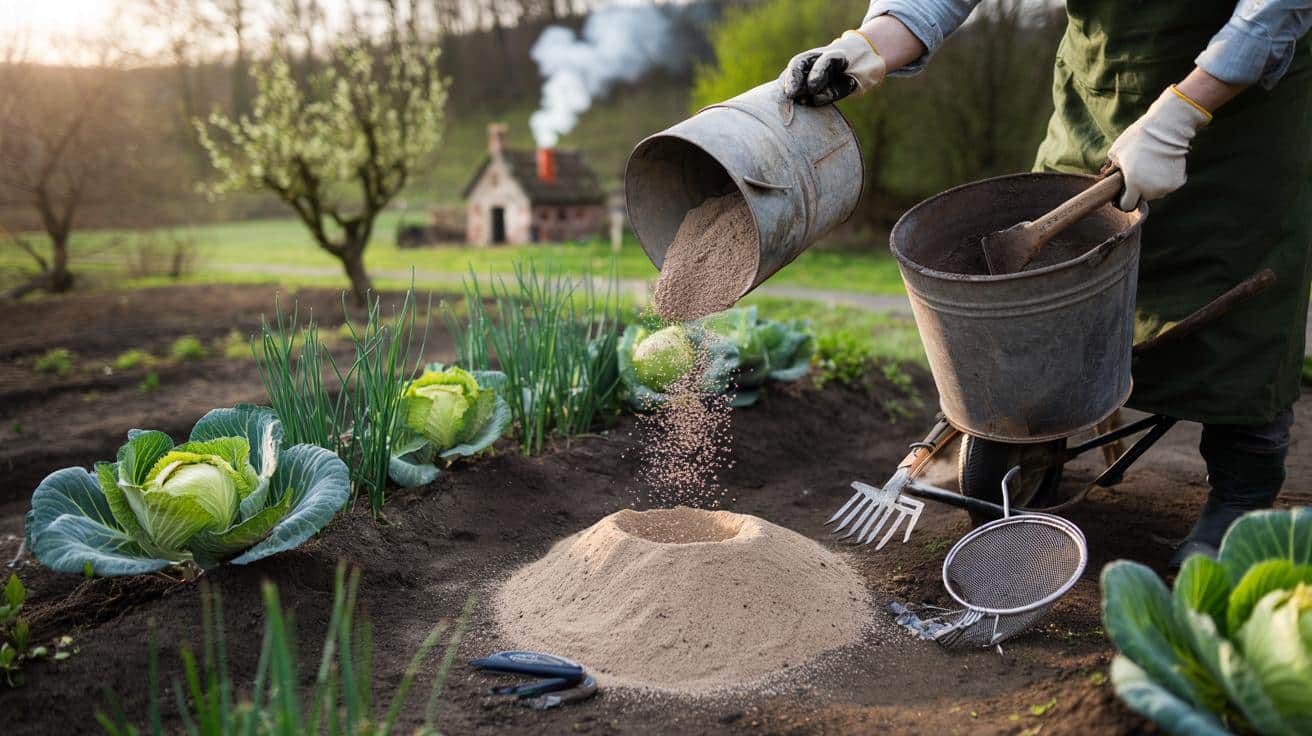
Most days, it goes straight to the bin. Meanwhile bags of fertilizer cost more, gardens look tired, and we keep buying what we already have at home.
I was scraping out my wood stove on a February morning when a neighbor peered over the fence. He was pruning peach trees with a coffee between his knees, hands black with sap. He asked what I do with the ash. I said the usual: trash. He laughed, not unkindly, and told me his roses drink it like tea. The ash drifted like a dull snowfall across my boots. He pointed at the wheelbarrow and winked. And yet, it wasn’t trash.
What’s really in stove ash?
Lean close and that pale dust is a mineral map. Wood ash holds potassium, calcium, and a pinch of phosphorus, the bones of plant life. It’s quick to release nutrients, a fast jolt for tired soil.
Picture a small orchard after a wet winter. One handful of fireplace ash per square meter around cabbages and garlic, and the leaves deepen by April. Tests show typical wood ash carries roughly 3–7% potassium (as K2O), a generous dose of calcium carbonate, and trace magnesium and zinc. Not bad for something we sweep up before breakfast.
Here’s why it works. Burned wood becomes alkaline and rich in soluble potassium, so soils short on K get a lift, and acidity drops. That’s a gift for clay beds or sour lawns. It’s also a warning to keep it away from acid-loving plants like blueberries and azaleas. **Ash changes pH fast, which can help or hurt.**
How to turn ash into plant food
Let it cool fully in a metal bucket. Sieve out nails and charcoal, then keep it bone-dry. Dust a light sprinkle—about one to two handfuls per square meter—around fruit trees, brassicas, onions, and garlic, then rake in and water. A thin shake over your compost every few layers adds potassium without smothering the pile.
Use on a windless day and think “salt on fries,” not a snowstorm. Keep it off seedling roots and away from potatoes, which can get scab in sweeter soils. Skip ash from coal, charcoal briquettes, painted or treated wood; that stuff carries contaminants you don’t want. We all know the mess a gust can make, so move slowly and breathe out before you tip the bucket. Let’s be honest: nobody really does that every day.
“Treat ash like spice: a pinch transforms the dish; a fistful ruins it.”
- Best targets: cabbages, kale, garlic, leeks, fruit trees, ornamental bulbs.
- Avoid: blueberries, rhododendrons, azaleas, camellias, potatoes.
- Rule of thumb: 5–10 kg per 100 m² per year, split into small doses.
- Don’t mix with urea or ammonium fertilizers—ammonia can gas off and vanish.
- Store dry; wet ash makes lye and loses punch.
**Never use ash from treated or painted wood.**
A small ritual that pays off in spring
There’s a rhythm to it. Empty the ash pan on quiet winter afternoons, sift, tuck the powder in a lidded tub, then give the garden a gentle dusting before a light rain. By March the soil feels looser, shy worms come back, and brassicas look less sulky. Small, repeated moves beat one grand gesture.
You’ll notice the quick wins first: tulip stems stand taller, garlic shoots a cleaner green, fruit buds seem braver after frost. The slower magic happens underground. Calcium nudges clay into better crumbs, potassium helps plants move water and sugars, and the pH shifts just enough for locked nutrients to wake up. **This is not a miracle, just a well-timed nudge.**
There’s also a kind of thrift that feels good. Free fertilizer from yesterday’s heat, a loop closed without speeches. The bin gets lighter, your soil gets stronger, and your morning routine gains a purpose that’s oddly calming. Your stove warms the room; your ash feeds the season. That little gray pile was quietly waiting for a job.
Keep the science simple, keep the habit human
The chemistry isn’t fancy. Ash is alkaline because it’s rich in carbonates; sprinkle a little, and soil acidity eases. Potassium is highly soluble, so plants sip it quickly. That’s why small, repeated doses are smarter than one heavy dump that washes away in the next downpour.
There are edges to mind. Mix with compost in thin layers so microbes stay happy. Test a corner of your soil if you can, or watch for signs: stunted blueberries mean you’ve gone too sweet, and rusty edges on leaves can hint at micronutrient lock-up. Apply in winter or very early spring while beds are bare and rain is gentle, then pause. Let roots talk back before you add more.
Safety is also part of the ritual. Wear gloves and a simple dust mask if the air is still, and never add hot ash to plastic bins. Metal buckets are boring and perfect. If ash gets wet, it can turn caustic—rinse skin with plenty of water and skip that batch for the garden. Simple rules, long payoff.
Maybe the most interesting part isn’t the potassium or the pH. It’s the shift in how we see leftovers. From waste to resource, from chore to quiet craft. Neighbors swap a bag of ash for a basket of lemons, and spring feels a little more cooperative than competitive. Try one bed, one tree, one rose if that’s your speed. Share what you notice. Pass along a handful in a paper bag to a friend who grows dahlias. The stove keeps the house warm. The ash keeps the garden honest. And you get to keep a small piece of winter working for you, long after the fire goes out.
| Point clé | Détail | Intérêt pour le lecteur |
|---|---|---|
| Right plant, right dose | 1–2 handfuls per m² on brassicas, garlic, fruit trees; avoid acid lovers and potatoes | Quick wins without plant stress |
| Quality matters | Only ash from clean, untreated wood; keep it dry, sieve out charcoal | Safer nutrients, fewer contaminants |
| Timing and method | Apply in winter/early spring; rake in lightly or layer thinly in compost | Better uptake, less runoff, calmer routine |
FAQ :
- Can I put wood stove ash on my lawn?A light winter dressing can help if your soil is acidic. Spread thinly—about 1 kg per 10 m²—and water in. Watch how the grass responds before repeating.
- Is ash good for tomatoes?Only in small amounts on neutral to slightly acidic soils. Too much ash can push pH up and lock out nutrients, leading to pale, stubborn plants.
- Can I add ash to compost?Yes, sprinkle a dusting every few layers. Don’t dump piles—aim for balance so the heap stays moist and alive. Think seasoning, not filler.
- What about charcoal ash or coal ash?Skip it. Charcoal briquettes and coal can contain additives or heavy metals. Stick to pure wood ash from untreated, unpainted logs.
- How do I store ash safely?Cool fully in a metal bucket, then seal it dry. Keep away from rain to avoid caustic lye formation, and label the tub so it doesn’t end up in the bin by habit.