It always happens on the coldest morning. Your boiler blinks, the radiators sulk, and the house feels like a station platform. The fix, almost every time? A tiny tube you never look at until it ruins breakfast.
A kettle hisses while the boiler, that metallic metronome in the corner, clicks and refuses to fire. A red light winks like a bad joke, and the shower upstairs is now an ice fountain.
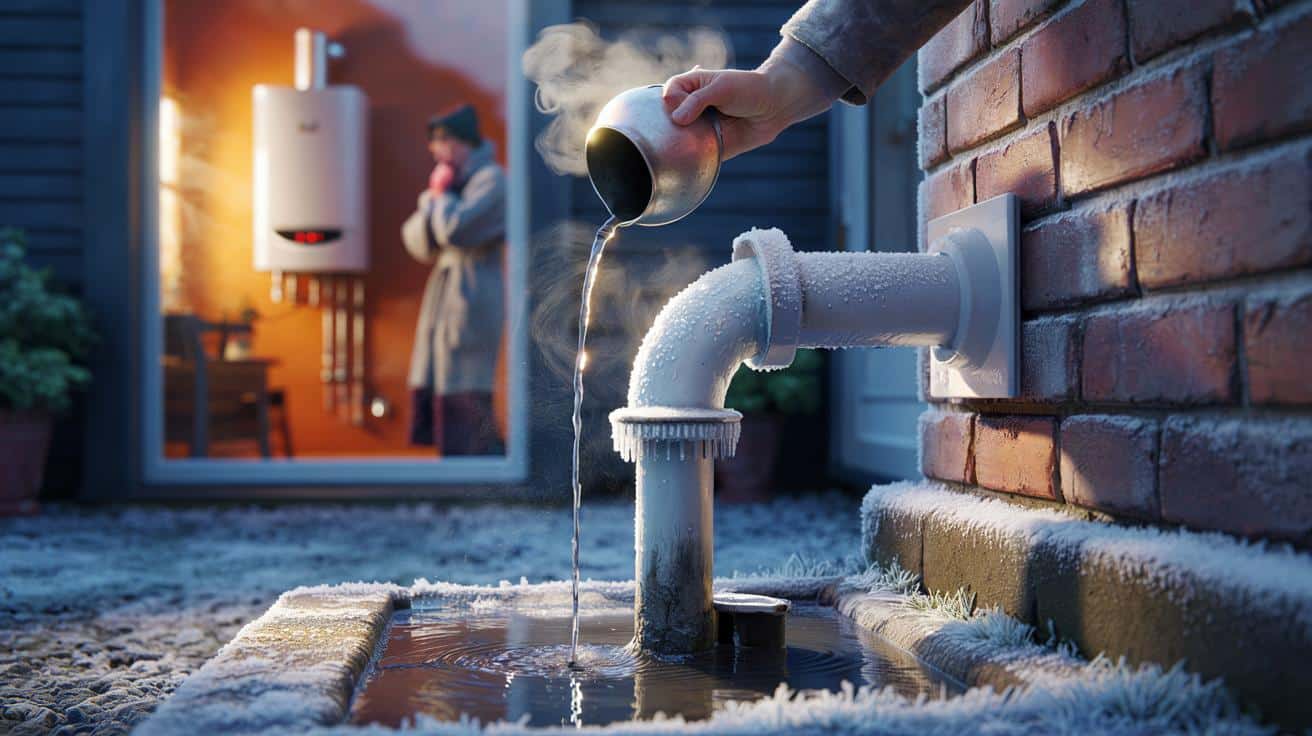
Outside, the air bites. Your breath makes little ghosts while you stare at a thin plastic pipe running to a drain, beaded with frost. The neighbor in a robe mimes shivering and says, “Frozen condensate. Same here last year.”
One kettle later, the boiler springs back to life with a soft whoomph. The radiators sigh. All for a piece of plastic no fatter than your finger.
The tiny tube that topples your boiler
Modern condensing boilers make heat efficiently by squeezing extra energy from exhaust gases. That trick creates acidic water called condensate, which drips away through a narrow plastic line to a drain. When that line blocks or freezes, the boiler goes into self-protection and stops.
For many homes, this “tubicino” runs outdoors for a short stretch. A light frost turns into a plug of ice, and the boiler’s sensors read trouble—low flow, backed-up water, unhappy flame. The lockout feels sudden, but it’s the end of a slow film: a drop, a chill, a blockage.
Engineers call it the usual suspect. During cold snaps, callouts jump by triple digits in cities from Turin to Leeds. One tech in Bergamo told me seven out of ten winter lockouts he sees are the same pattern: a boiler in perfect shape, and a stubborn tiny pipe outside wearing a sleeve of ice.
We’ve all lived that moment when your house, so soft and warm, turns uncooperative in minutes. Watch the clues. Gurgling noises, a faint smell of damp near the boiler cupboard, an error code like F28, E133, A01, or EA—they’re different by brand but they whisper the same thing: condensate isn’t draining.
Condensing units can produce one to two liters of condensate per hour on heavy duty. That water is only mildly acidic, nothing dramatic, but physics is merciless: a -3°C night, a short exposed run, and the drain’s a popsicle. Inside the boiler, a trap fills, then the water backs up. Safety circuits trip. Silence.
The logic is dull and elegant. A pressure switch notices a mismatch. A sensor notes no flame sustain. The control board chooses caution, because flame plus trapped water is a bad marriage. The boiler halts not because it’s broken, but because it’s smart enough to wait.
How to free it in minutes (safely and legally)
Start with your eyes and hands. Find the condensate line—usually white or light grey plastic, about the thickness of your thumb, exiting the boiler and heading to a drain or stack. Trace the part that runs outdoors. If it’s frosty or rock-hard to the touch, you’ve found your villain.
Fill a jug with warm water and pour it slowly along the outside run. Not boiling—just comfortably hot. Wrap a hot towel around the tight bends for a few minutes, then pour again. You may hear a soft glug as the ice surrenders. Go back inside and hit reset once. Two tries max.
Warm-not-boiling water helps thaw without shocking the plastic. If you have a hairdryer, use it indoors on any exposed indoor segment only, kept clear of water. Don’t pry, don’t twist, don’t hammer. If the pipe routes to a nearby sink trap, run the tap; the warm wastewater sometimes nudges the ice past the U-bend.
Let’s be honest: nobody actually does this every day. The win is to make it harder for ice to form at all. Fit proper insulation around the outdoor stretch, and if the pipe is under 22 mm in diameter, consider an upgrade to a wider bore that copes better with frost.
Check the slope. A sag creates a puddle that becomes a plug. Keep the run as short as possible outdoors and route it internally where you can. Avoid pushing the reset button repeatedly; it’s there for a reason, not for roulette. Your boiler isn’t stubborn—it’s cautious.
One engineer put it bluntly in my notebook:
“Nine times out of ten, if I can thaw that little pipe, your boiler will pur like a kitten. People think it’s a gas issue. It’s winter water.”
- The condensate pipe is the slim plastic drain from boiler to waste.
- Thaw with warm water or a warm towel, never boiling.
- Insulate, upsize, or reroute indoors to prevent repeats.
- Reset once or twice after thawing, not ten times.
Before the next freeze: small tweaks, big calm
Future you will thank present you. Wrap that outdoor run with proper weatherproof insulation, not a scarf borrowed from the hall. Add clips so the pipe doesn’t sag and hold water. If a plumber visits, ask about upsizing the exterior section to 32 mm and keeping bends gentle; a wide, short, sloped path drains like a good gutter.
Some homes fit a discreet heat trace cable with a thermostat on the line, a tiny ribbon that warms just enough on sub-zero nights. Others reroute the pipe entirely to an internal soil stack. Both cut the drama to near zero. The cost is often less than a single emergency callout at 7 a.m. in January.
If your boiler still locks out after a thorough thaw, shift your attention to cousins of the same problem: a blocked condensate trap inside the cabinet, or a kinked silicone tube heading to the air pressure switch. These are small parts too, but they live in the “call a pro” zone. Call a licensed pro if gas or sealed components are involved. Your warmth is worth that phone call.
A small tube, a big lesson
There’s an odd comfort in how ordinary the fix can be. A kettle, a towel, a minute of patience. Homes rely on tiny things doing their quiet job, and that’s a fragile kind of magic. Share this with the neighbor who keeps texting you photos of error codes.
We like to think winter fails are dramatic, but most are petty—slivers of ice in slim pipes. The bigger trick is making a habit from a small check: Is the pipe insulated? Is the run short? Is the slope steady? These aren’t grand works. They’re housekeeping for heat.
Next cold snap, you’ll hear that whoomph again and smile because your boiler didn’t blink. Or you’ll remember where the kettle lives and fix it in your robe, barefoot, coffee cooling on the counter. Either way, the house wins, and the morning keeps its rhythm.
| Point clé | Détail | Intérêt pour le lecteur |
|---|---|---|
| Condensate pipe basics | Thin plastic drain carrying acidic water from condensing boilers | Identify the real cause of sudden lockouts fast |
| Quick thaw method | Pour warm (not boiling) water outside; wrap a hot towel; reset once | Restore heat in minutes without damage |
| Prevention upgrades | Insulate, upsize to 32 mm outdoors, shorten runs, add heat trace | Fewer callouts, fewer cold mornings, lower stress |
FAQ :
- How do I spot the condensate pipe?Look for a light plastic tube, about finger-thick, leaving the bottom of the boiler and heading to a drain or external wall. Often white or grey, with gentle bends.
- Can I pour boiling water to melt the ice?No. Use warm water so the plastic doesn’t warp or crack. Two or three slow pours beat one dramatic splash.
- Which error codes hint at a blocked condensate?Brands vary, but codes like F28, F1, E133, EA, and A01 often trace back to ignition/flame issues caused by poor condensate drainage.
- Is vinegar safe to clear the trap?A small amount of diluted white vinegar can help deodorize indoor traps, yet avoid strong chemicals. If unsure, leave it and call a technician.
- What if the pipe isn’t frozen and it still locks out?It might be a clogged internal trap, a kinked pressure tube, or low system pressure. Don’t open sealed gas compartments—call an engineer.