The Cenone della Vigilia is a love letter to crunch and perfume, yet the story doesn’t end at the table. It continues in the pipes, the river, the sea.
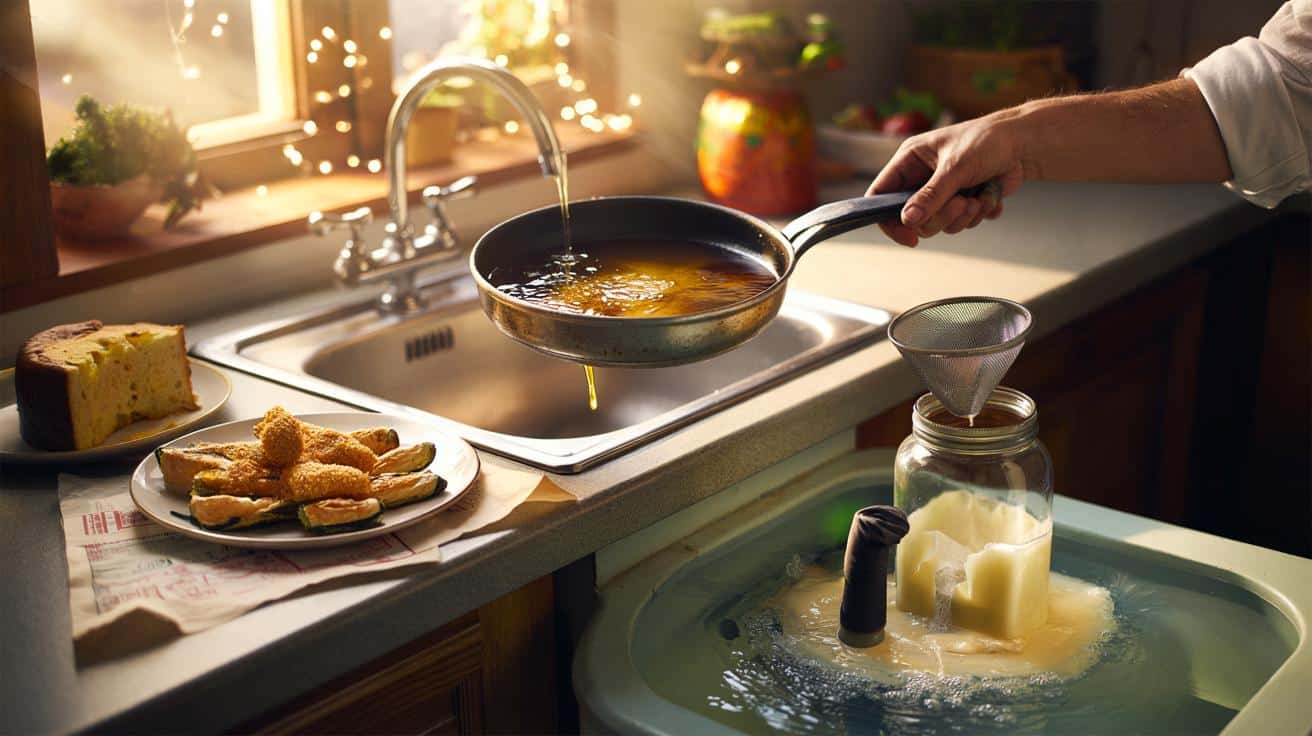
The fishmonger’s paper is still damp on the counter when the last slice of panettone is claimed. Oil cools in the pan like a quiet puddle of sunset. Someone twists the tap, swirls, and aims for the drain — “just this once.”
We’ve all had that moment where fatigue makes the practical choice feel harmless. The sink swallows, the water hisses, the kitchen feels clean again. In the hush of Christmas Eve, that’s the tiny decision that writes a much bigger mess. The mystery starts there.
The Cenone’s invisible spill: where your frying oil really goes
The fried baccalà and crisp zucchini blossoms always steal the show. Then comes the backstage: a pan of used oil that smells like triumph and anchovies. Pouring it in the sink feels like erasing the night’s work with a single move.
Yet the moment that warm, viscous blend touches cold pipes, it cools into a sticky film that clings to everything. Your drain narrows, the building’s line fattens, and the city’s sewers become a cafeteria for a monster with a very real name: the fatberg.
Picture the morning after in any big city — Milan, London, New York — when plumbers crack open a block and find a pale, waxy boulder fed by thousands of kitchens. London once battled a 130-ton fatberg the size of a blue whale. Not all of that was holiday cheer, but a surprising slice starts in frying pans like yours.
Water plants are built to treat water, not oil. When oil slips through, it coats equipment, slows oxygen exchange in waterways, and gums up the bacterial biology that cleans our waste. Fish eggs suffocate; reeds lose their sheen; costs spike for everyone on your street.
There’s also the home front. Those sour, drain-like odours in January? That’s not “winter pipes.” It’s a thin, rancid layer of oil mixed with soap scum in the S-trap, a perfect sticky net for hair, breadcrumbs, and calamari crumbs.
Your sink isn’t an ocean. It’s a narrow tube with elbows and joints where oil loves to rest. Even if today it seems to flow, it’s building tomorrow’s bill.
What to do instead: simple, no-stress routines that actually stick
Let the oil cool until the pan is warm, not hot. Set a metal sieve over a clean jar or bottle and line it with a coffee filter or a piece of kitchen towel. Pour slowly to catch crumbs, cap the bottle, label it “used oil,” and store it for recycling or a second use if still fresh.
If the oil smells burned or fishy, skip reuse. Wipe the pan with paper before washing so you don’t send a slick into the drain. Freeze small amounts in a jar to contain smells until drop-off day. **Cool, strain, bottle, drop off.** That’s the mantra.
Let’s be honest: nobody really does that every day. So set yourself up to win. Keep a “used oil” bottle under the sink and a funnel in the top drawer. Place a sticky note on the splashback that says **Don’t pour it down the sink.** When you’re sleepy, visible prompts beat willpower.
If you live in a small apartment, swap the jar for a wide, sealable can. Label the date. Don’t mix different oils endlessly; quality drops fast. And if you fried fish, don’t reuse that oil for sweets the next day — your castagnole will taste like cod.
One more thing: oil doesn’t belong in the toilet either. Same pipes, same problem. Many Italian towns and European cities run “olio esausto” collection points or orange street bins; check the municipal map once and save it in your phone. **Used oil is not “just food”** once it leaves the pan.
“After every holiday, we see the same story — blocked traps, slow basins, and families blaming the plumbing,” says a veteran plumber in Bari. “It’s almost always cooking oil mixed with soap.”
“Treat oil like paint or batteries: store it, then take it where it becomes fuel instead of a problem.”
- Keep a dedicated bottle for used oil, with a funnel inside the cupboard door.
- Strain warm, not hot, oil to remove crumbs that speed rancidity.
- Drop off at city collection points; many convert it into biodiesel or soap.
- Wipe pans with paper before washing to stop hidden slicks in your drain.
- If it smells off, don’t reuse — recycle it on your next errand day.
Keep the ritual, change the ending
The Cenone della Vigilia is a ritual of sound and scent: oil crackling, people laughing, steam on cold windows. Changing how we say goodnight to that pan doesn’t touch tradition; it protects the places we love beyond the table.
Your sink will run free in January. The sea that gave you those anchovies breathes a little easier. And somewhere, a future fatberg never forms because you paused for two minutes. Small habit, big ripple.
Share the trick with the person who always claims the apron. Or stick a funnel in their stocking. A feast is a story we write together. So is what happens after.
| Point clé | Détail | Intérêt pour le lecteur |
|---|---|---|
| Oil hardens in cold pipes | Warm oil meets cool plumbing and congeals, trapping crumbs and hair | Prevents clogs, odours, and emergency plumber bills |
| Simple disposal routine | Cool, strain, bottle, and take to local collection points | Turns waste into biodiesel and keeps drains clear |
| Reuse with common sense | Only reuse neutral, clean oil once or twice; never if it smells burnt | Saves money while keeping food tasting great |
FAQ :
- Can I pour a tiny amount of oil down with lots of hot water?Hot water cools fast in the pipes, and oil still sticks. Even small amounts add up across a building.
- How many times can I reuse frying oil?If it’s neutral oil and wasn’t overheated, one to two times. If it darkened, foamed, or smells fishy, recycle it, don’t reuse.
- What’s the safest container for used oil?A clean glass jar with a lid or the original plastic bottle. Keep it upright, labeled, and away from heat.
- Where do I take it in Italy?Look for “olio vegetale esausto” collection points, eco-centers, or orange street bins. Many supermarkets host drop-off tanks.
- Is vegetable oil really bad for rivers?Yes. It forms films that reduce oxygen exchange and strains water treatment. Better as biodiesel than as pollution.