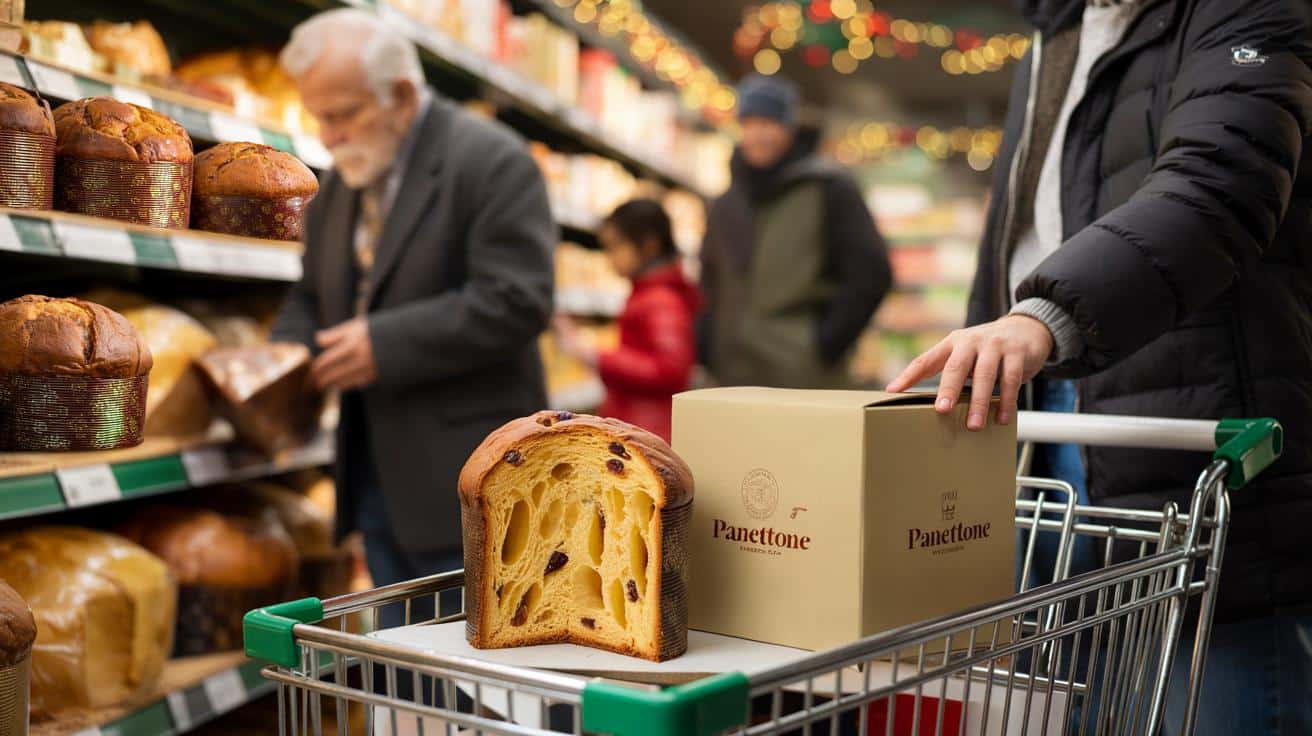
A supermarket panettone just dethroned the usual festive heavyweights. Altroconsumo’s latest ranking overturns the holiday script, handing victory to an unassuming label while the big names watch from the wings. For shoppers staring at a wall of golden boxes, the rules suddenly feel different.
Trolleys nudging, coats damp, that faint citrus-and-vanilla haze hanging over the seasonal aisle. People reached for familiar ribbons and grand boxes, until someone pointed at a quieter, cheaper panettone and whispered, “Altroconsumo says this one.”
A few heads turned. A kid tapped a carton to hear the hollow thud. An older man checked the ingredients with the seriousness of a jeweller. Brand loyalties wobbled right there, between the butter and the boxed Moscato. The mood shifted—small but real.
A quiet upset.
Altroconsumo’s shake-up: the unexpected winner and what it tells us
The headline is simple enough: a supermarket private‑label panettone topped Altroconsumo’s test. Not a century-old pasticceria name. Not the glossy tin you keep for biscuits. **The winner wasn’t a heritage brand.** That stings pride, but it also sparks curiosity. What did the lab and tastings pick up that marketing didn’t?
Consider the scene: classic 1 kg boxes lining up like soldiers, prices jumping from budget to boutique. The testers broke it all down—crumb elasticity, fruit distribution, butter aroma, even label clarity and packaging. In blind tasting, the quiet contender sang a little louder: a plush, even crumb, bright candied peel, raisins that tasted like raisins, not sugared cardboard. Price tags told one story. Mouths told another.
There’s a lesson here about perception. Brands throw glitter; panels weigh texture and flavour. Panettone is technical: long fermentations, a delicate balance of fat and sugar, the famous “alveolation” that gives that honeycomb shred. A well-made industrial loaf can nail those metrics when process control is tight. **Price didn’t predict pleasure.** Consistency did.
How to pick a supermarket panettone that tastes like a bakery one
Start with the label. Look for butter as the fat, not generic vegetable oils. Egg yolk should be specified, ideally not just “eggs”. Raisins and candied peel listed with clear percentages are a good sign. Mentions of natural leaven or “lievito madre” suggest care in fermentation. Lightly press the base through the box: you want bounce, not brick.
Next, read the date and packaging. Fresher isn’t always better, but a distant best‑before often hints at decent moisture management. No dents, no broken inner bag. At home, bring it to room temperature for at least two hours before slicing; warmth wakes aroma and softens the crumb. Let’s be honest: nobody really inspects crumb patterns in the aisle every day. Still, two quick checks—label and feel—go a long way.
One more thing about serving and storing. Open the inner bag only when you’re ready, and keep the offcuts tightly wrapped. If the crumb dries, a gentle, brief oven warm-up can revive it. This isn’t sacrilege; it’s a sign of better industry standards meeting real life.
“Great panettone is engineering with soul,” says a pastry technologist who’s judged national competitions. “If the fermentation sings, everything else follows.”
- Look for butter, egg yolk, natural leaven.
- Feel for bounce through the box.
- Serve warm; slice with a long, gentle sawing motion.
- Wrap leftovers fast; revive briefly with low heat.
- Trust your palate over the bow on the box.
The bigger picture: taste, price, and the holiday myth
There’s something relieving about this upset. We’ve all had that moment when the family table splits between “artisan only” and “grab it at the supermarket.” Altroconsumo’s ranking suggests a new middle ground. Some industrial loaves have caught up, not by trickery, but by better flour control, slower proofing, and cleaner recipes.
It doesn’t erase the magic of a handmade panettone. It just says the supermarket aisle isn’t the guilty compromise it once was. **Trust your senses, not the ribbon.** Slice, sniff, pull the strand between your fingers: does it stretch and shimmer, or break into sawdust? That test beats the price tag every time.
And what about tradition? Tradition evolves. Nonna’s advice would probably be the same: pick the cake that tastes like Christmas to you. Share it. Laugh when the raisins fall out. Save the last heel for breakfast coffee. The ranking is a map, not a law.
Here’s the conversation this shakes loose: if a modest panettone can win on crumb, aroma, and fruit, what else in our festive basket is stuck in brand mythology? Maybe the best bottle isn’t the priciest. Maybe the tin does lie. The real power of Altroconsumo’s list is not the winner’s name, but the confidence it gives shoppers to look beyond the show. There’s freedom in that. Not an iconoclasm, a gentle nudge—towards flavour over folklore, and pleasure over prestige. Share a slice and see where the discussion goes.
| Point clé | Détail | Intérêt pour le lecteur |
|---|---|---|
| Altroconsumo’s surprise winner | A supermarket private‑label classic panettone topped blind tastings and lab checks | Reframes how to choose without overspending |
| What testers value | Crumb elasticity, fruit quality and distribution, butter aroma, clear labelling, packaging | Shows practical criteria you can apply in minutes |
| Shopper’s checklist | Butter over oils, egg yolk, natural leaven, springy feel, warm before serving | Immediate, no‑nonsense steps for better flavour at home |
FAQ :
- Which panettone actually won Altroconsumo’s ranking?Altroconsumo’s top spot went to an unassuming supermarket private‑label classic panettone in the standard 1 kg size. The surprise wasn’t a boutique name, but a quietly well‑made loaf that excelled in blind tasting and lab metrics.
- How did Altroconsumo test the panettoni?They combined sensory panels with technical analysis: checking crumb structure and elasticity, moisture, fruit quality and distribution, aroma profile, and label and packaging accuracy. That mix reduces bias and rewards real performance.
- Do I need to spend more for a good panettone?Not necessarily. Mid‑priced and even budget options can deliver if the recipe is clean and the process is tight. Splurge when you want the artistry or unique flavour twists, not because price alone guarantees joy.
- What’s the difference between artisan and industrial panettone?Artisan loaves often use longer natural fermentations and small‑batch care; industrial bakeries trade on precision and consistency. Both can be excellent—or mediocre. Taste is the judge, not the label on the box.
- Any serving tip that changes everything?Warm the wrapped loaf near a gentle heat source for 30–60 minutes, then slice with a long, relaxed motion. The aroma blooms, the crumb softens, and the citrus notes pop. Small ritual, big payoff.